Just a Walk Away: A Food Walking Tour in Kathmandu
Bakery history, samosas, dosa and paan – with a lotus lake in between
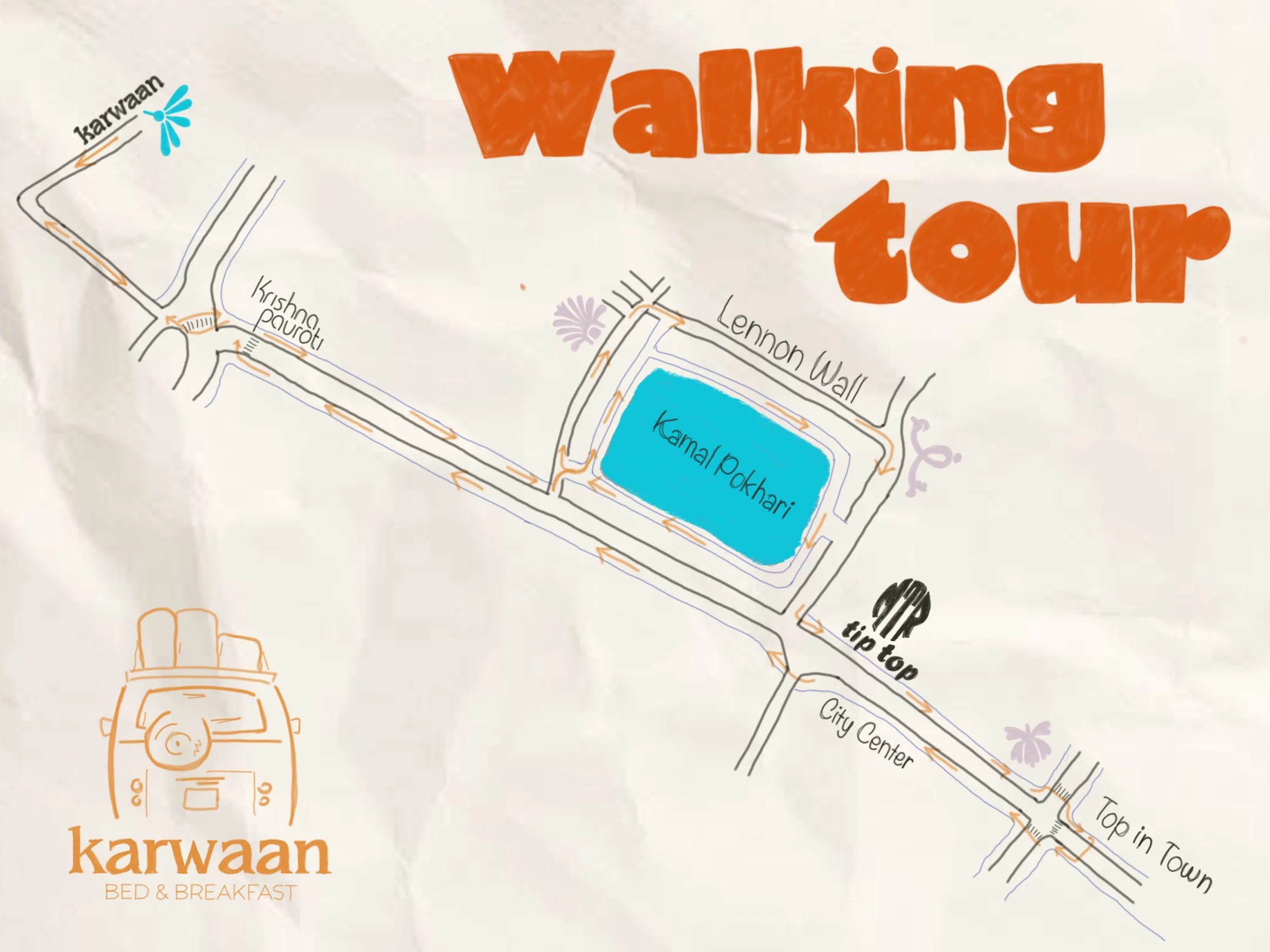
This self-guided walking tour in Kathmandu takes you from our doorstep at Karwaan Bed & Breakfast on a loop around Kamal Pokhari, with plenty of snack stops along the way. You’ll start at Nepal’s first bakery, take a chiya break by the pond, and pass Kathmandu’s answer to Prague’s Lennon Wall. Then it’s choose-your-own-adventure: North Indian samosas and chaat at Tip Top Sweets or South Indian dosa at MTR. Finish with a traditional paan as a digestive and a bit of shopping.
When to go: You can take this walk during the day or even after dark, but we wouldn’t advise setting off after seven, because Kamal Pokhari and Tip Top Sweets close in the evening. MTR and the paan stall stay open later, so if you start late, you can skip the pond and Tip Top and still enjoy the rest. Come hungry!
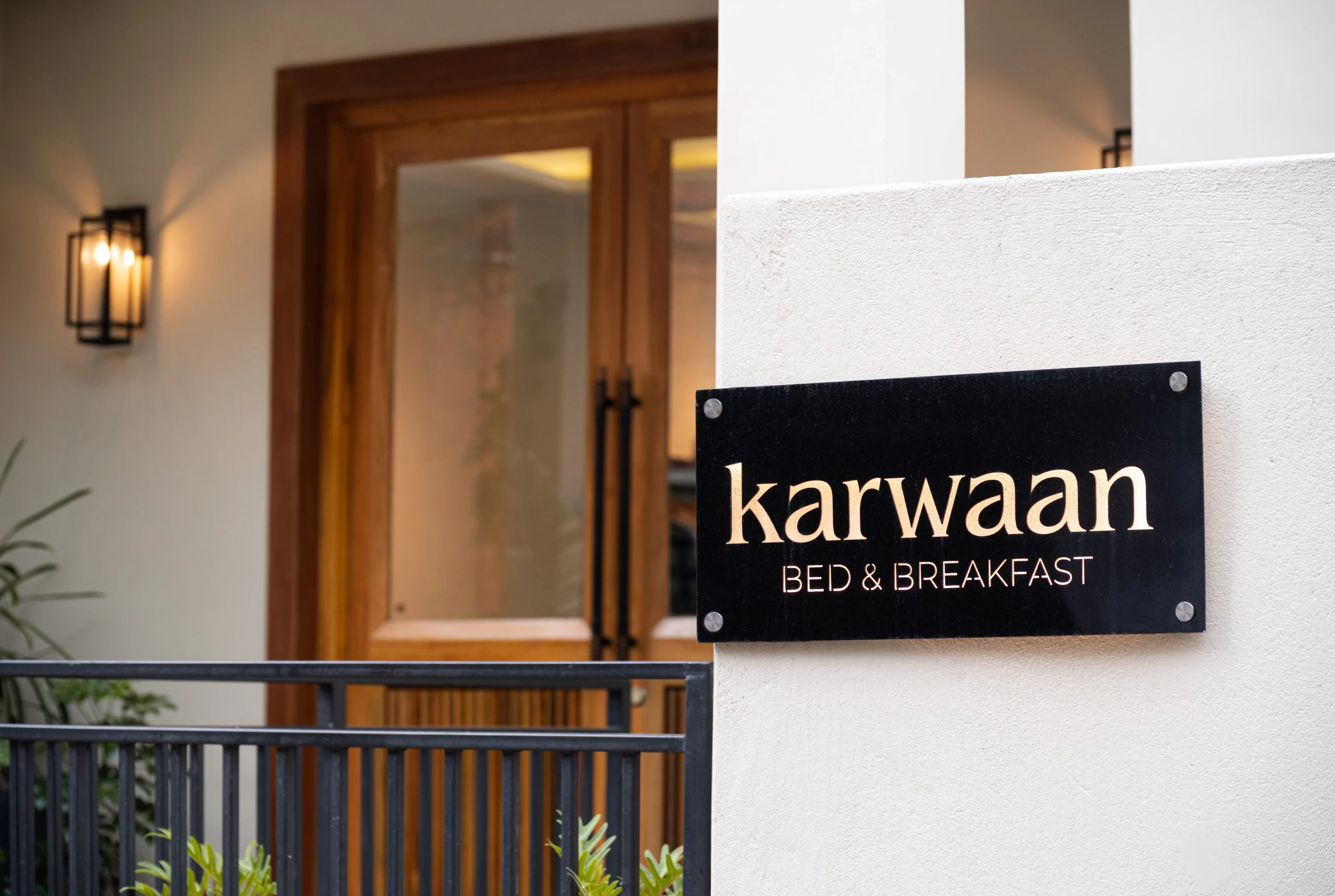
Walking tour of Kathmandu: Setting off from Karwaan
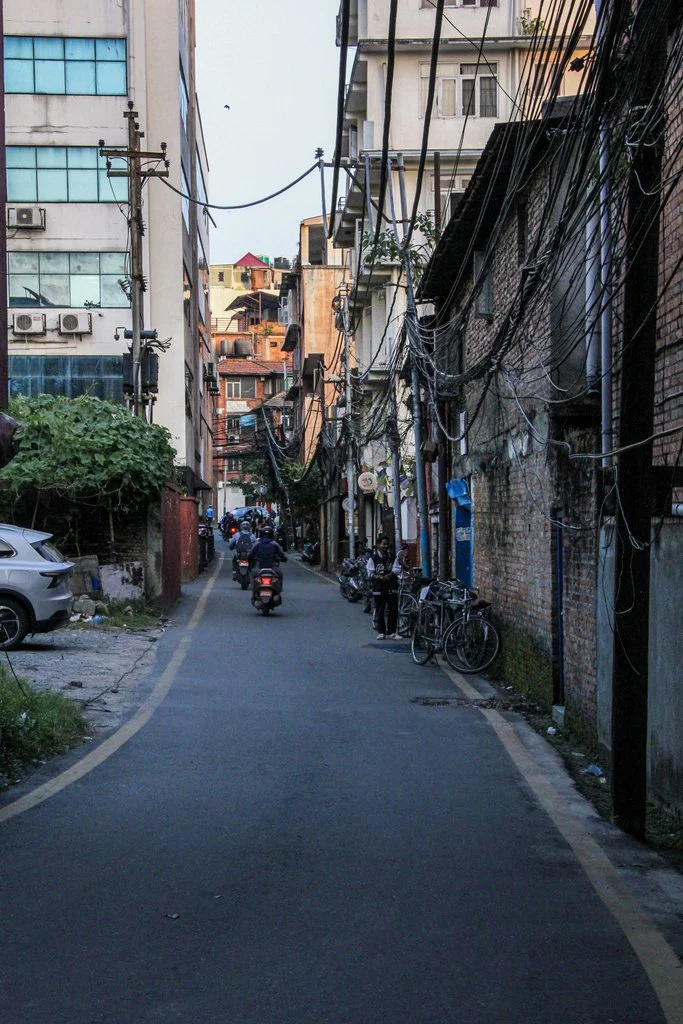
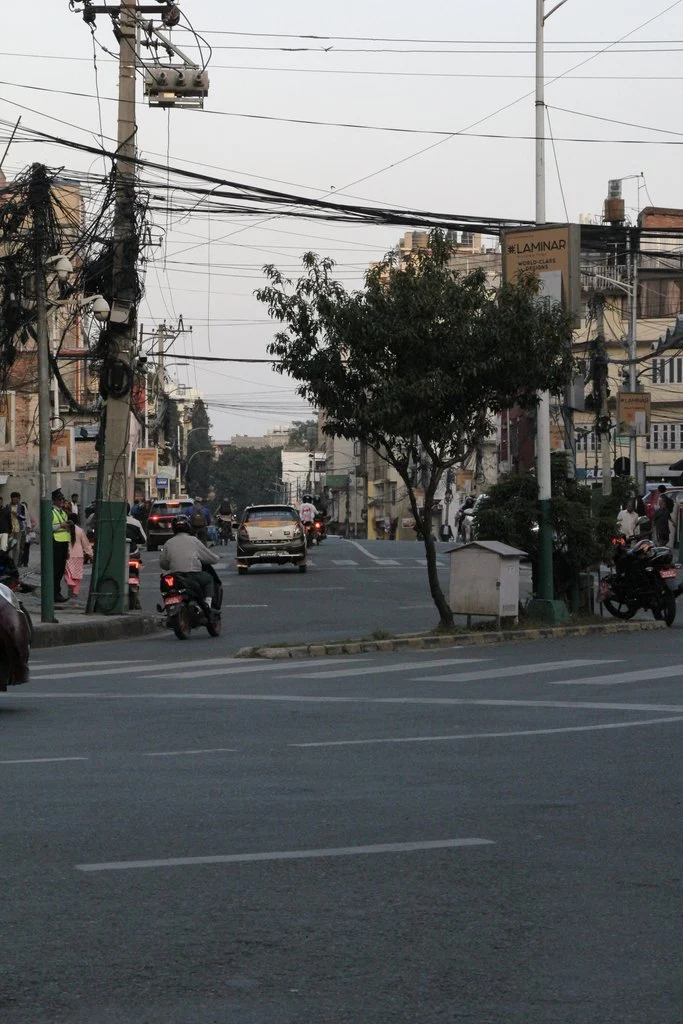
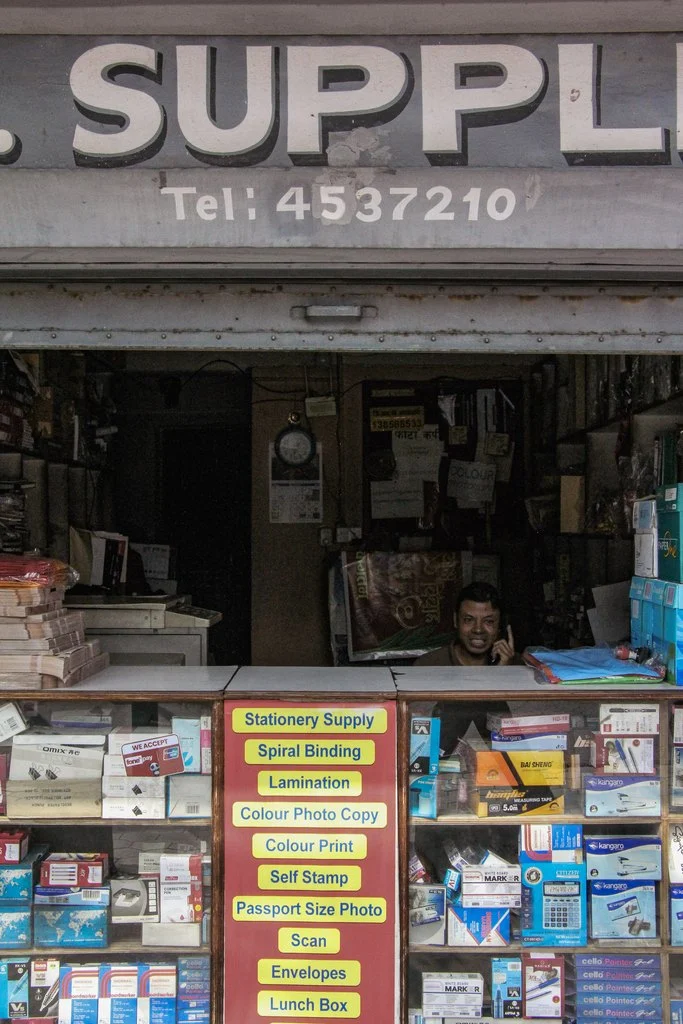
Leave Lalupate Marg and stop at the Hattisar taxi stand. Face straight ahead: that’s the street we’re walking down. Cross at the left-hand crossing, then pass our go-to copyshop. I’m pretty sure its PC still runs on Windows XP.
Krishna Pauroti
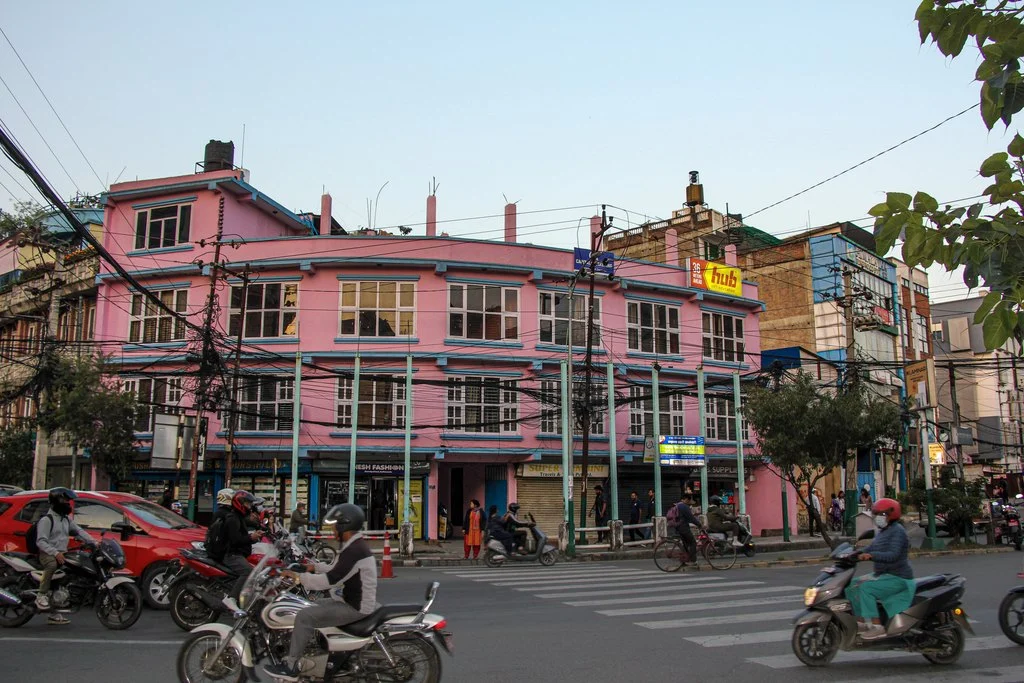
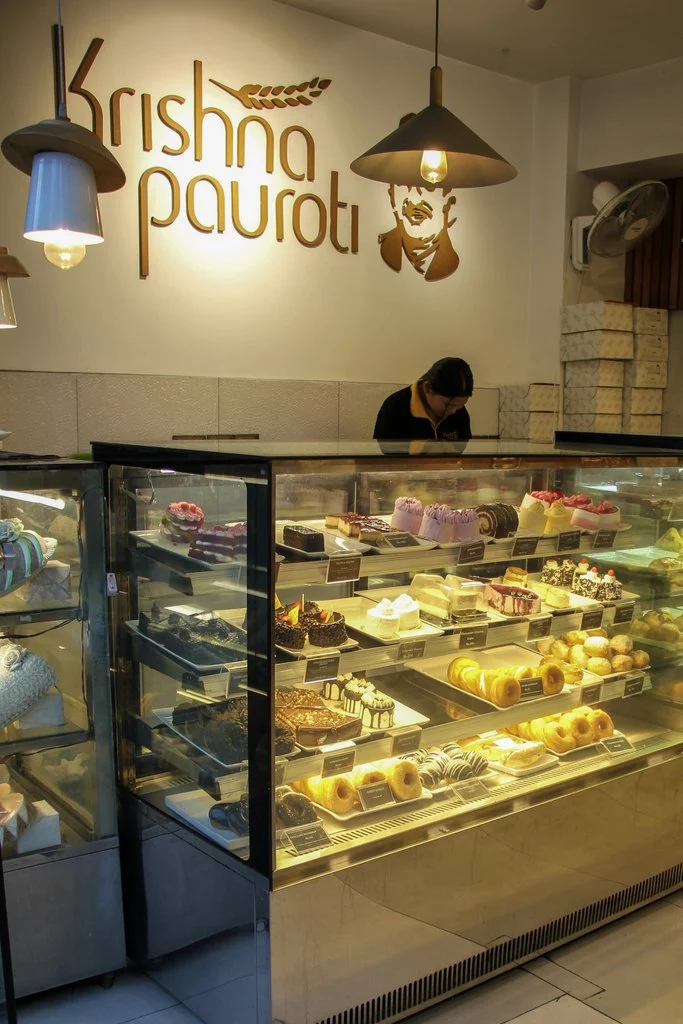
You’ll right away notice Krishna Pauroti bakeries on all sides. Anyone who loves baked goods, listen up: you’re standing at a historic landmark. Krishna Pauroti is the first bakery in Nepal, the place that introduced bread loaves and cakes to the Nepali food world. If you had toast or a bun at breakfast this morning, we bought it here.
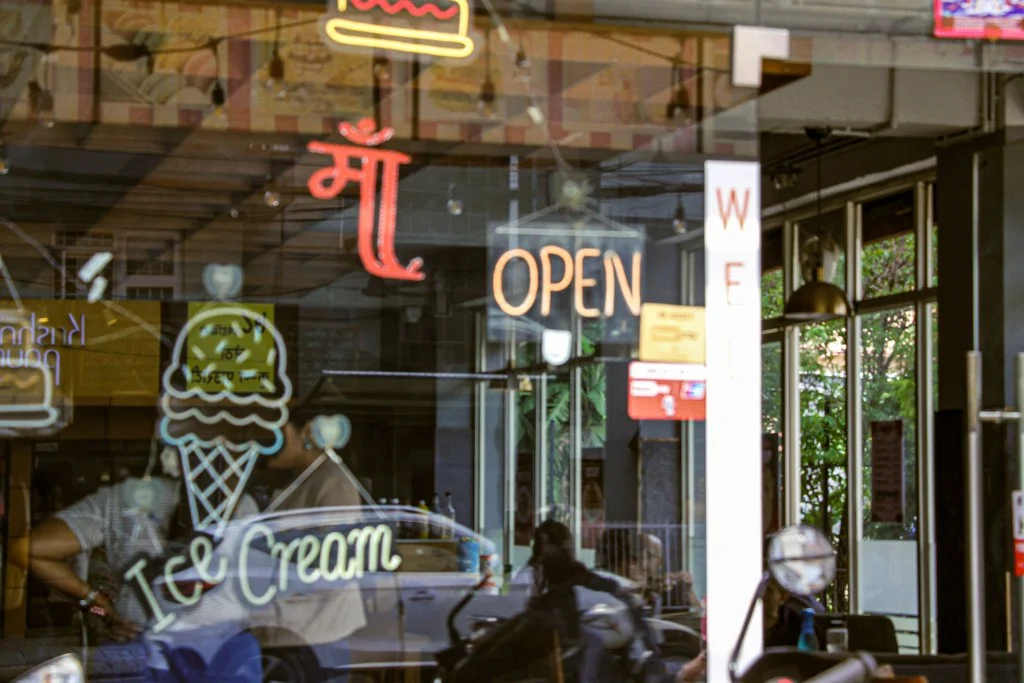
The story starts in 1944, when Krishna Bahadur Rajkarnikar fell out with a member of the ruling Rana family and left for Kolkata. There he is said to have rescued a young girl from the crowd at the Kalighat temple. Her grateful father, a baker, taught him the craft. Krishna returned to Kathmandu in 1947 and began selling bread a year later.
It wasn’t an easy sell. At first he baked only 10–12 loaves a day. Kathmandorians – Kathmanditos – Kathmandivas, however, preferred their roti, swari and puri to this foreign loaf. Also, there was quite a bit of masala (gossip): Without yeast available, Krishna used traditional hops to raise the dough, which gave the bread a slightly sour taste. Soon a rumour spread that it contained alcohol. Another held that the dough was kneaded with feet, because pauroti sounds like the Hindi word for foot. His answer was to knead the dough by hand in front of his shop, where everyone could watch.
Krishna nearly gave up – and you would have been without a toast for breakfast this morning – until a neighbour, the future prime minister BP Koirala, kept dropping in for tea and bread and talked him out of it. By 1965, with King Mahendra reportedly among its fans, Krishna Pauroti was the Valley’s most popular bakery. By 1976 it was selling around 35,000 loaves a day, delivered by bicycle. (It wasn’t the only business to pedal its way to success. Ask Sanjai about it!) Today the family-run bakery makes around 300 loaves a day plus cakes, pastries and doughnuts. As Krishna’s son puts it, they’re the ones who made bread with tea a thing in Kathmandu.
Go inside and browse. Maybe pick up some cookies for your trek?
Kamal Pokhari: the Lotus Lake
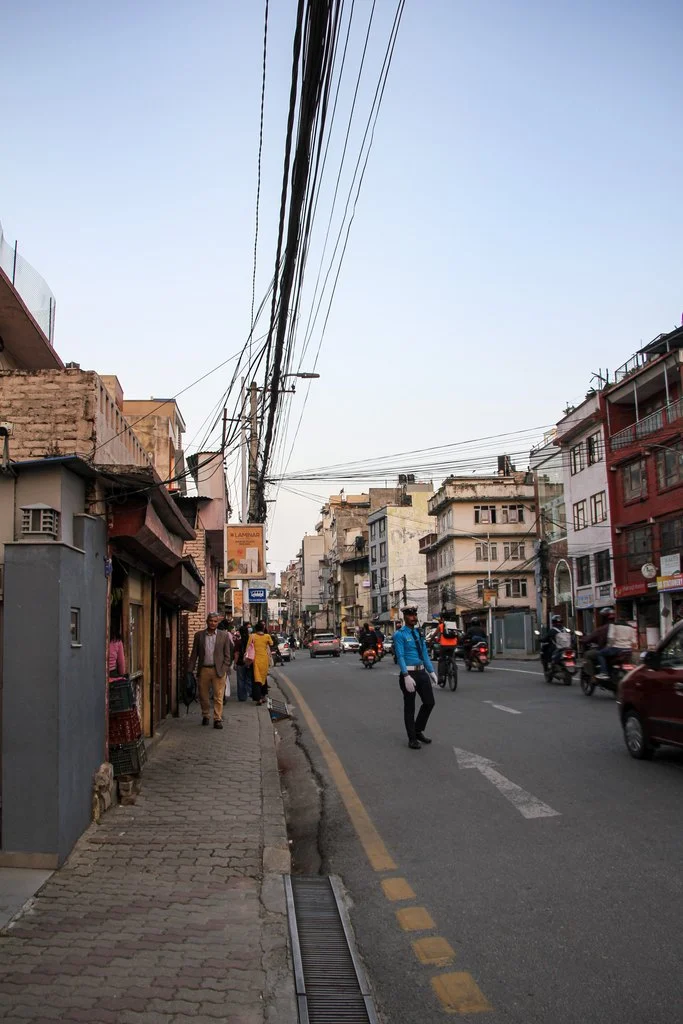
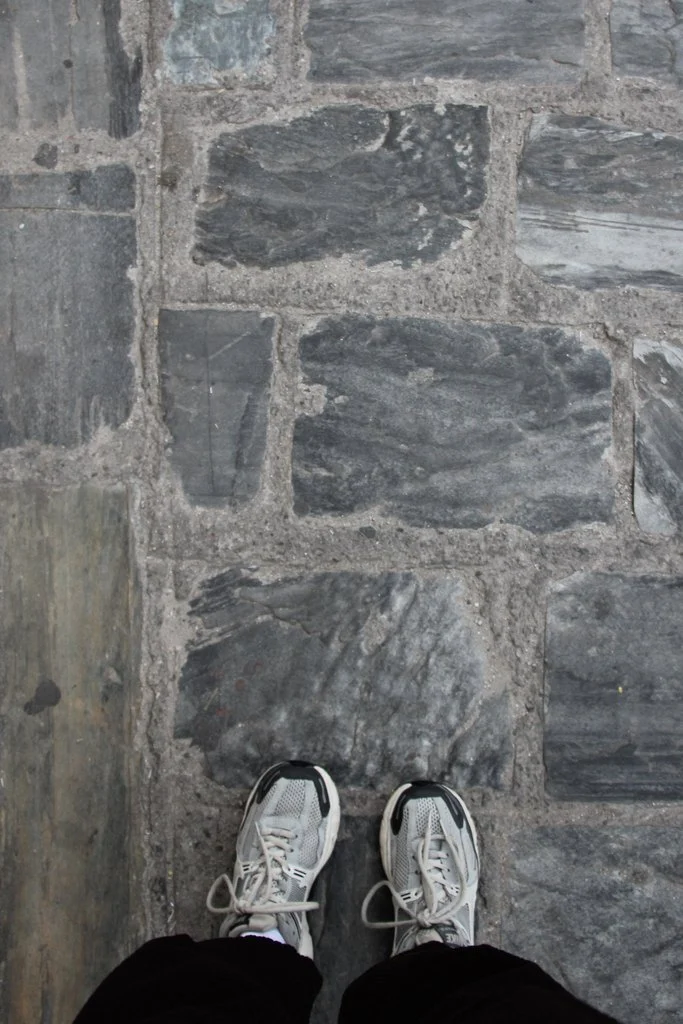
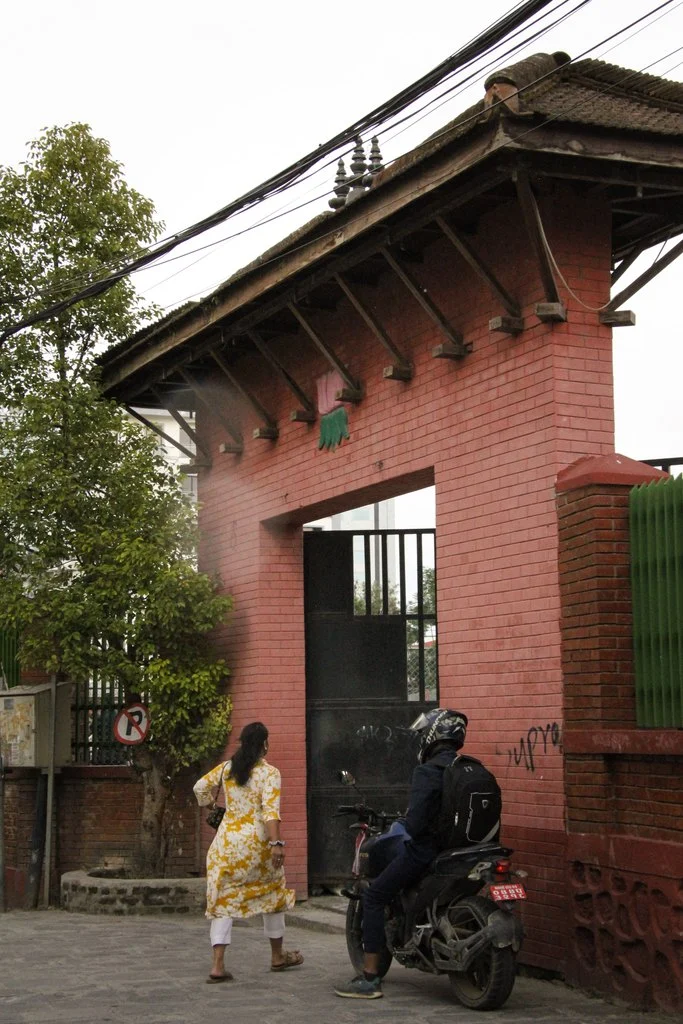
Keep walking straight until you reach a left turn with large grey cobblestones. The area was thoroughly renovated a few years ago and further work was finished in 2026. Follow the lady in yellow and walk through the big red gate into the park. (Please note that the park is only open until around 7 p.m.)
Kamal means lotus and pokhari (with a silent a) means pond, so this is the Lotus Lake. What can you spot in the middle of the lake? Believe it or not: Real lotuses really did bloom here once. The pond has since been reshaped into a very planned, slightly concrete space – something conservationists have criticised. Still, I love coming here. To me it’s one of the few real oases Kathmandu has to offer. Mornings belong to the walkers doing their rounds and late afternoons and evenings to students and families.
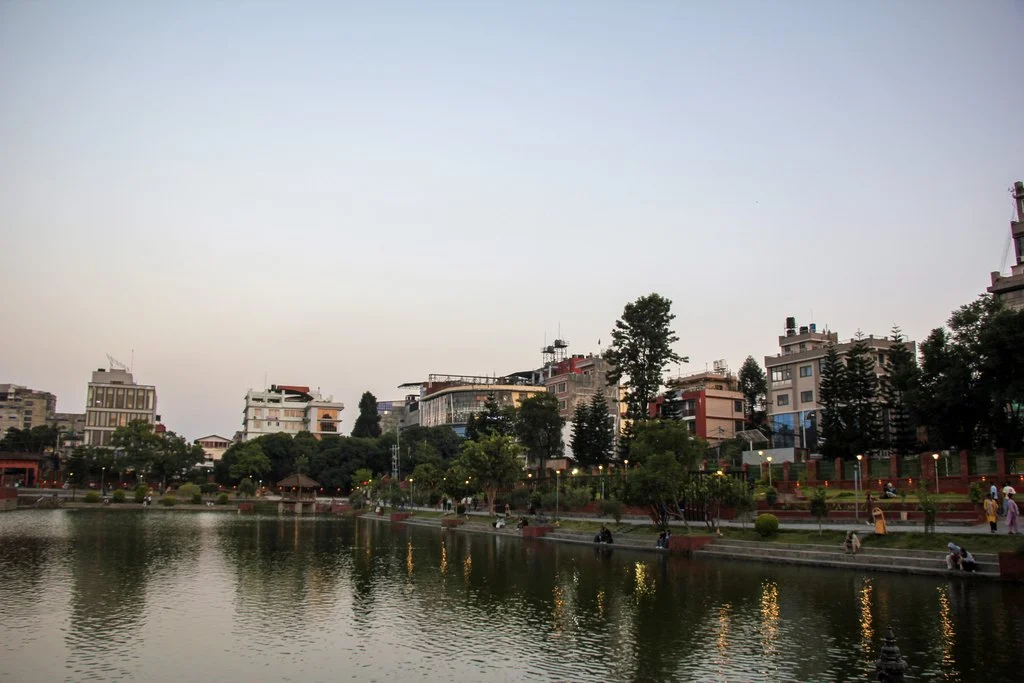
Do as locals do and walk around the lake clockwise, as with anything of religious significance in Nepal. Or sit in the shade and exchange some masala. In the far right corner, there’s a small temple.
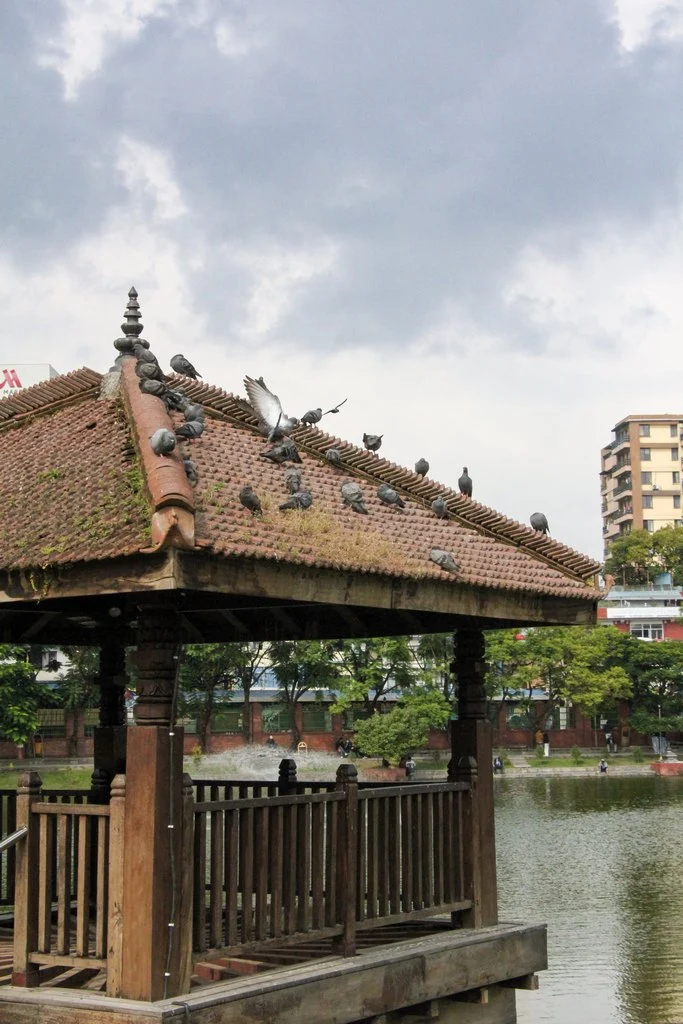
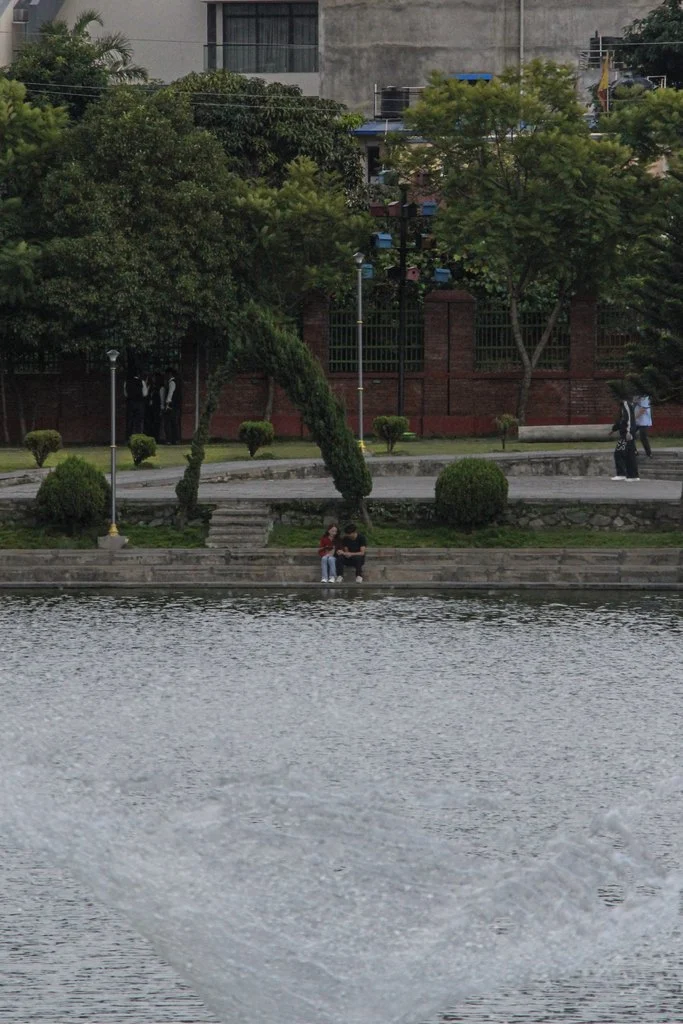
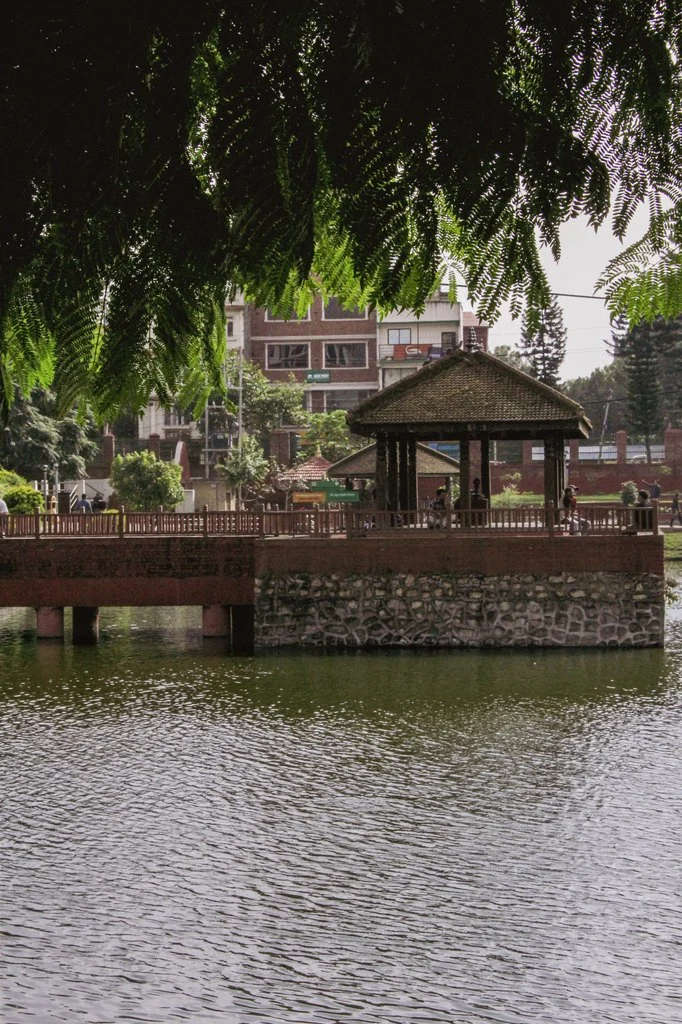
If you’re here around Chhath in mid-November, the lake becomes a ritual site. The festival honours Surya, the sun god, in gratitude for the blessings of life on Earth and to seek the fulfilment of personal wishes. It lasts four days, beginning on the fourth day after the new moon and ending at sunrise on the seventh. Devotees gather at the water and many stay through the night waiting for the sun to rise.
Walk around once, then leave through the main gate. Turn right for a walk around the outside perimeters.
Around the park
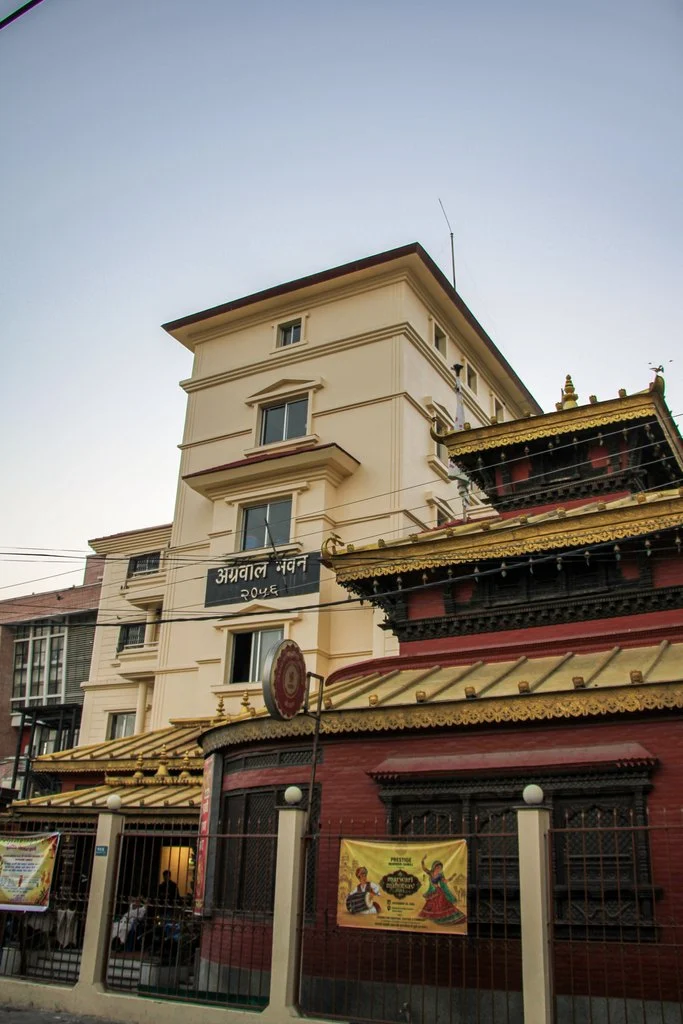
Outside, you’re greeted by chiya spots. There are plenty around the lake. A few doors down is Agarwal Bhawan.
A quick background on Indians in Nepal: India and Nepal share an open border and a long history of movement between them. Under the 1950 Treaty of Peace and Friendship, citizens of both countries can live and work in the other’s territory without a visa.
On the corner you’ll find one of my favourite misspelled signs in Kathmandu. Let me know which one is yours!
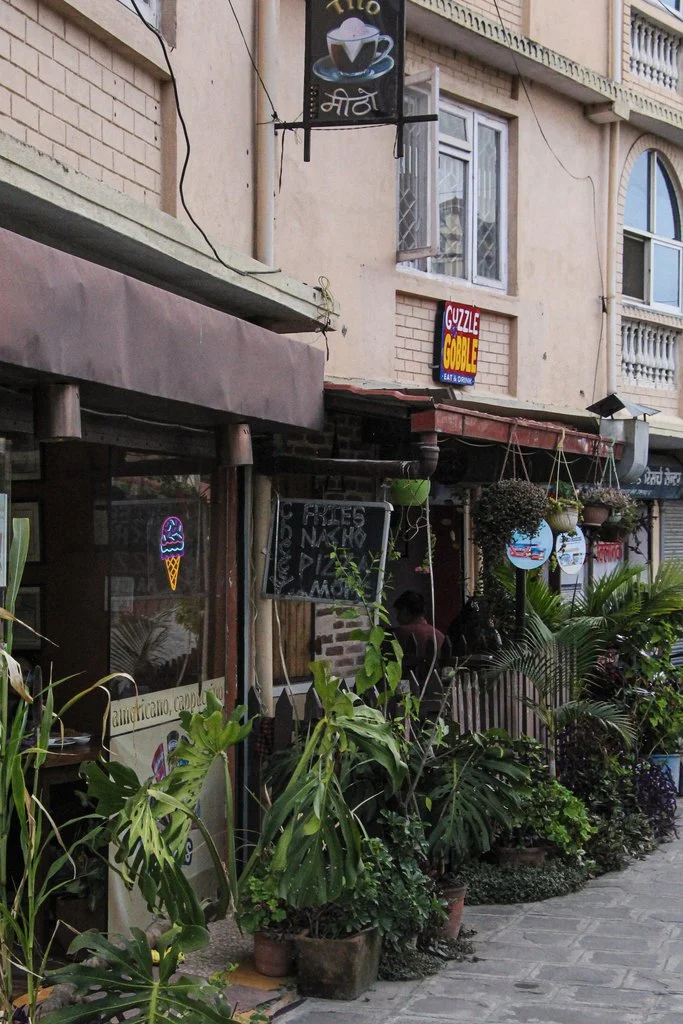
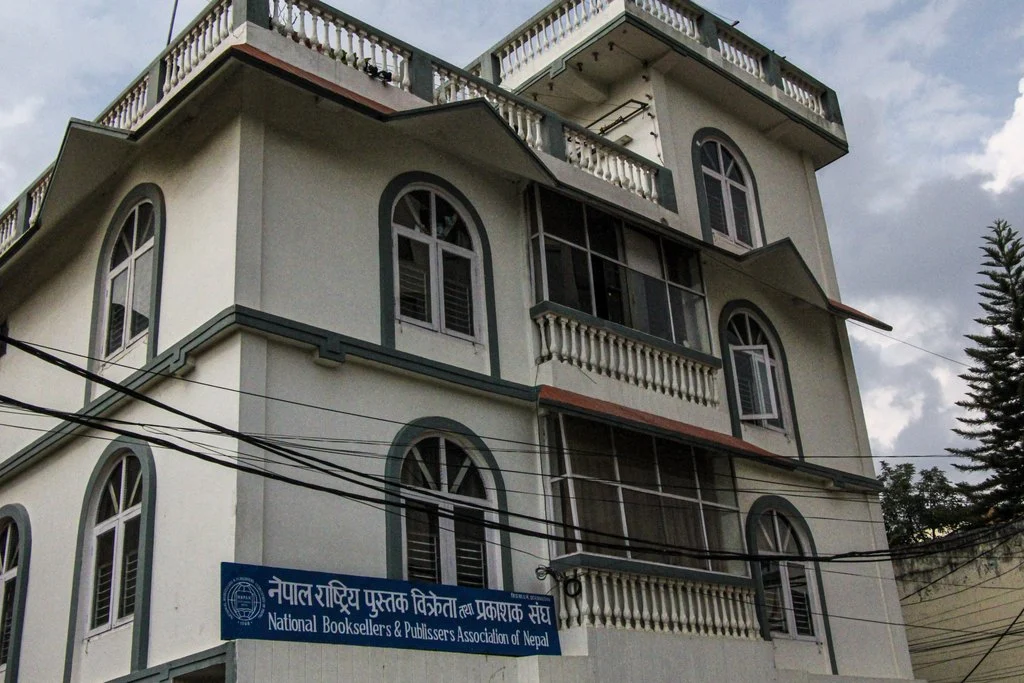
Turn right, past more chiya spots, and you’ll reach Kathmandu’s version of the Lennon Wall. The original is in Prague, but this one has the same spirit. Keep an eye out for its funky graffiti. It also makes a great selfie spot: prop your phone on the ledge of the wall around the pond and set the timer.
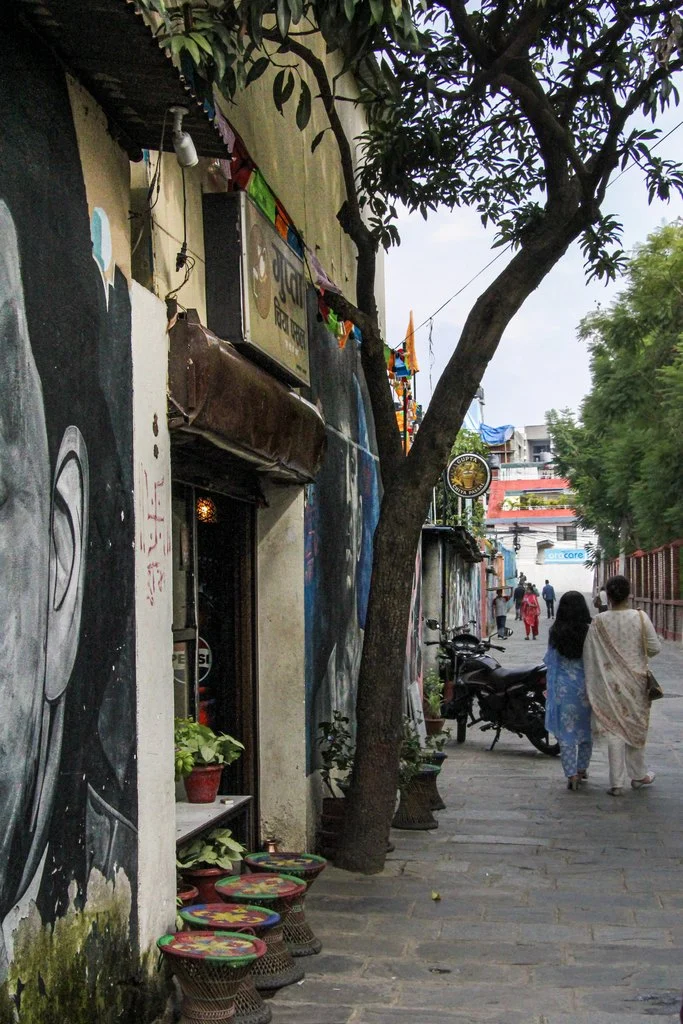
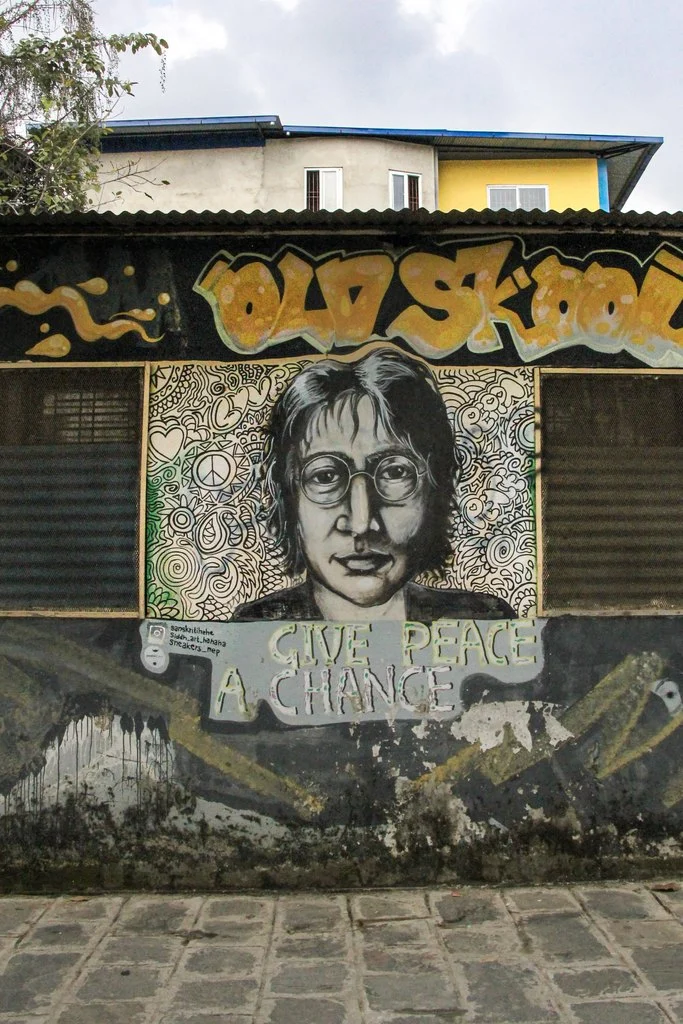
If you are afraid of large groups of teenagers, be aware that the Kathmandu Institute of Science & Technology (KIST College) is located here.
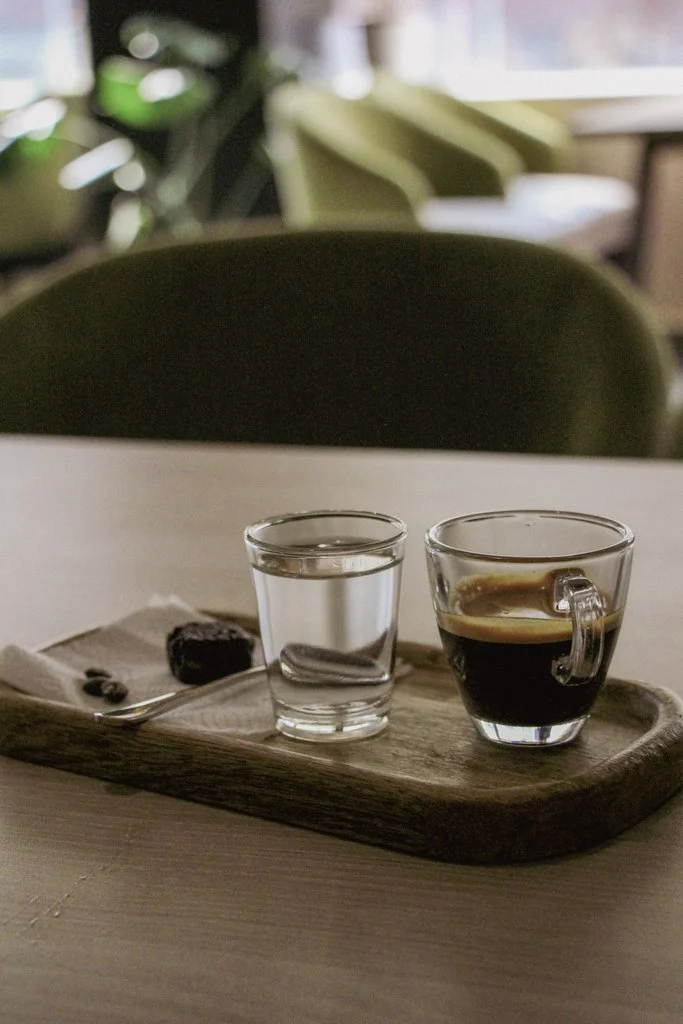
At the next corner is a building with a café (Arabica Coffee), an arts and crafts shop (Itsy Bitsy) and a gym (Banu’s Gym) upstairs, in case you want one last workout before your trek. Take a break at a chiya spot or the café or hold on for a few more steps and enjoy some South Indian filter coffee at MTR. Continue right, down the cobbled street until you reach the main road.
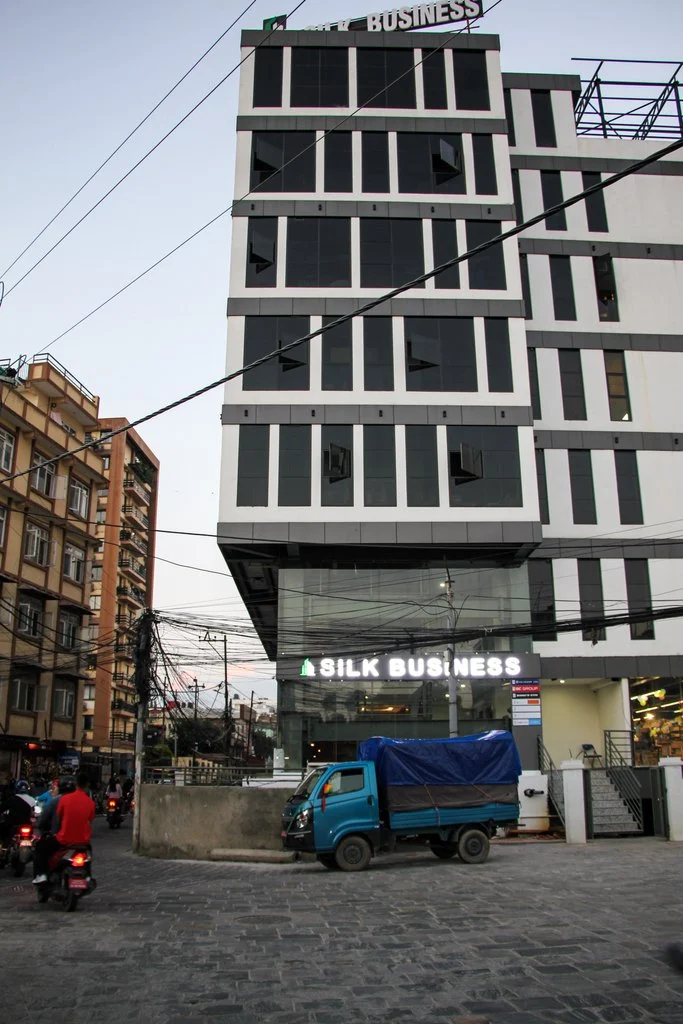
Turn left and walk a few steps. Once the narrow pathway widens, you are standing in front of not one but TWO of our favourite Indian food spots: Tip Top Sweets and MTR. Both are fully vegetarian and have great vegan options, too.
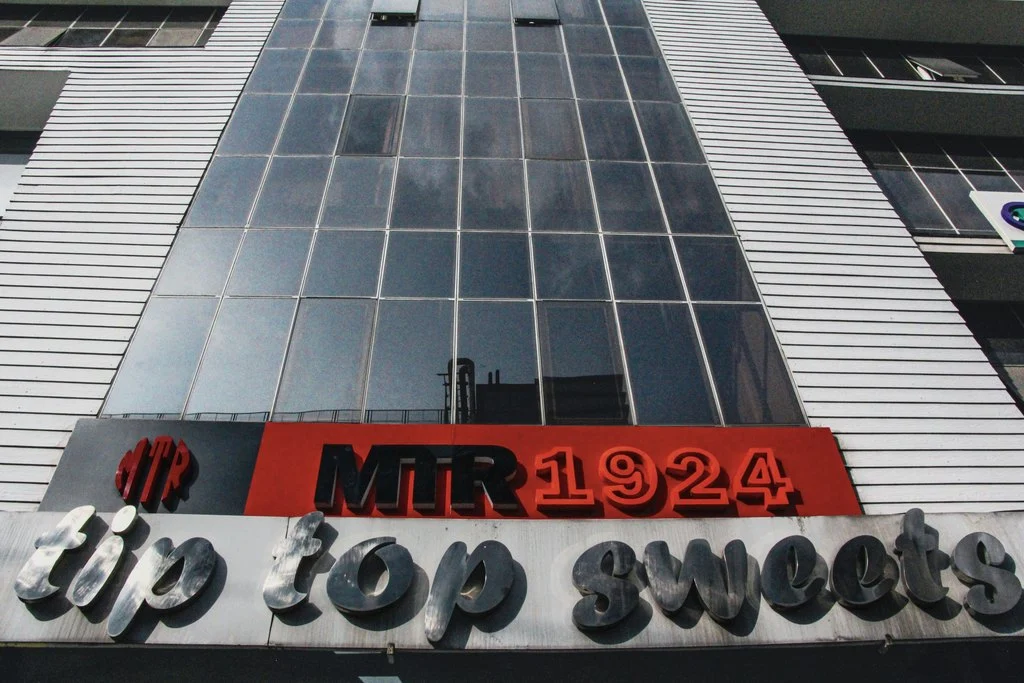
Tip Top Sweets
Tip Top is more than 40 years old and started as a tiny stall in a narrow alley (galli) off New Road. That original stall was renovated in 2026 and you can still find it in the same spot if you can spot the narrow entrance! The Kamal Pokhari Tip Top Sweets is one of seven outlets in the city.
How it works: Order and pay at the counter and you’ll get a receipt. Take this receipt to the back. Depending on what you ordered, you hand it either to the person at the stall or through the window to the kitchen – or both. They will tick of your order on the receipt. When your order is ready, it will be called out.
What to order: You HAVE TO try the samosas. They’re THE best in town. A samosa is a deep-fried pastry stuffed mostly with aloo (potato) and served with a sweet and spicy chutney. According to Tip Top, theirs are vegan. Beyond samosas, we recommend the “Quick Bites”, “Veg Stuffs” and “Chaat” sections. Skip the South Indian dishes and the momos. For the chaat, tell the chef (not the counter) “bina dahi” (without yoghurt) to make it vegan. If you’re in the mood for something sweet, there’s a huge selection of Indian sweets. Jalebi, anyone? Or maybe Shashank’s favourite, a gulab jamun? All the sweets are made with ghee or milk, so vegans should stick to the savoury snacks.
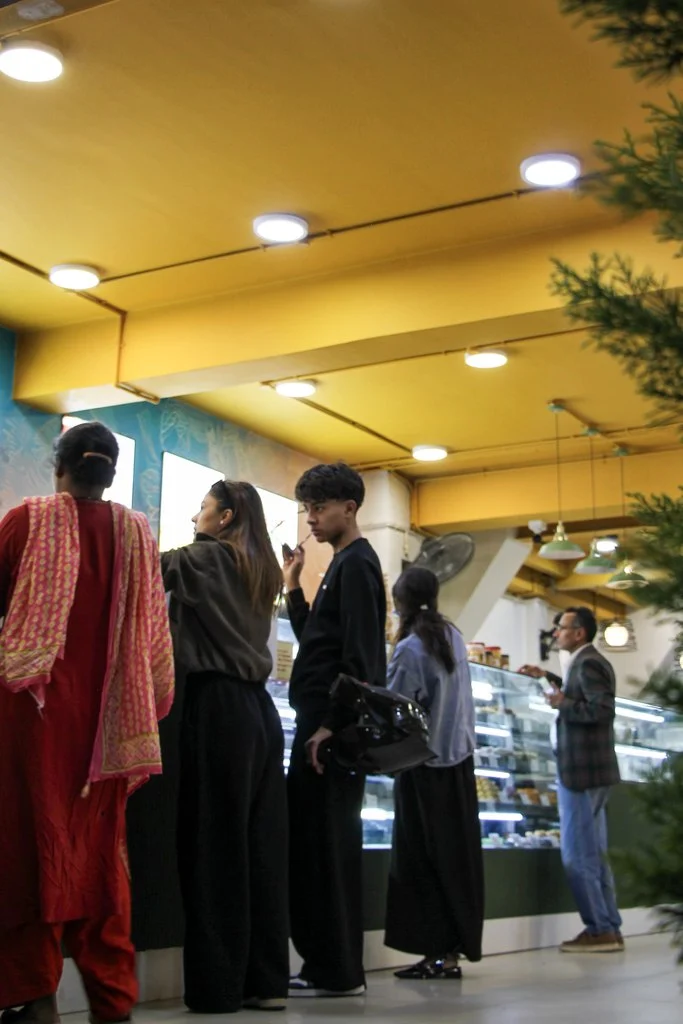
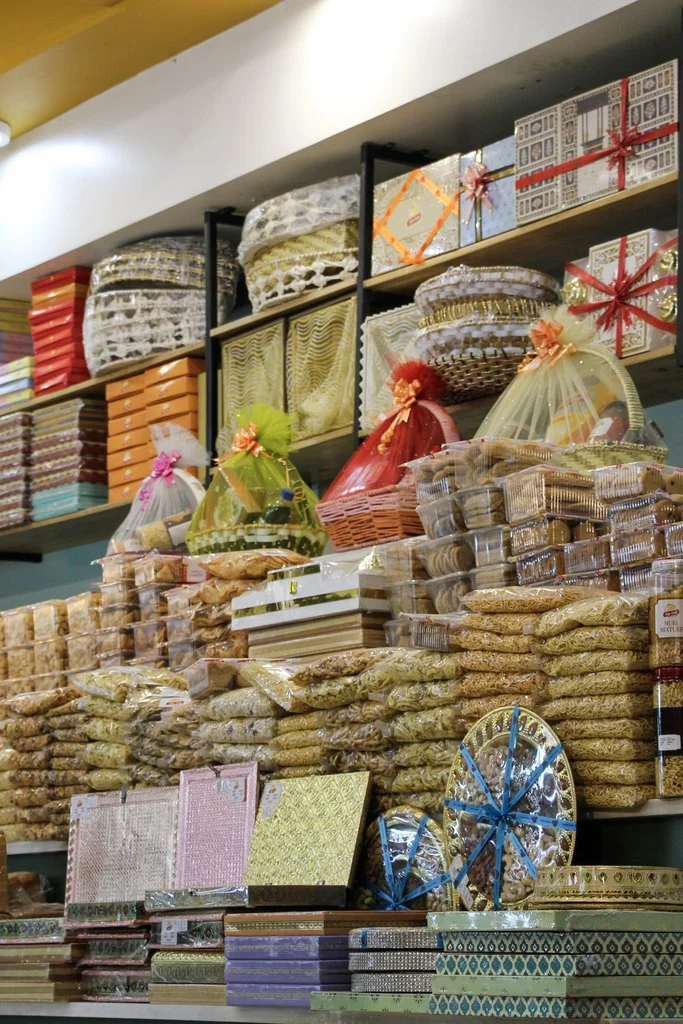
How did the samosa get to Kathmandu?
Nepal has a long tradition of bringing in skilled craftsmen called mistris from India to teach a trade, and Kathmandu’s sweet shops probably did the same with samosa makers from Delhi. They brought the name along with the recipe.
Tip Top has its own success story. Once upon a time, Kathmandu’s sweet shops kept their samosas on a metal plate above the stove and served them lukewarm. Then a little shop opened in a dim alley on New Road and started frying samosas fresh in an open kitchen. People went wild for them. (To this day, if you go to the New Road outlet during rush hour, you will still have to fight the crowds for your freshly fried samosas.) Because the shop sat next to Tip Top Tailors, customers simply called them “Tip Top ko samosa” and the name stuck. Fair warning: The expression “tip top” has stuck with me, too. Anything that sounds especially good or works especially well is now “tip top” to me and after your samosa, I suspect it might become part your vocabulary, too.
MTR
We’re really sorry to have put you in this pickle, but just above Tip Top is our other favourite Indian restaurant: MTR.
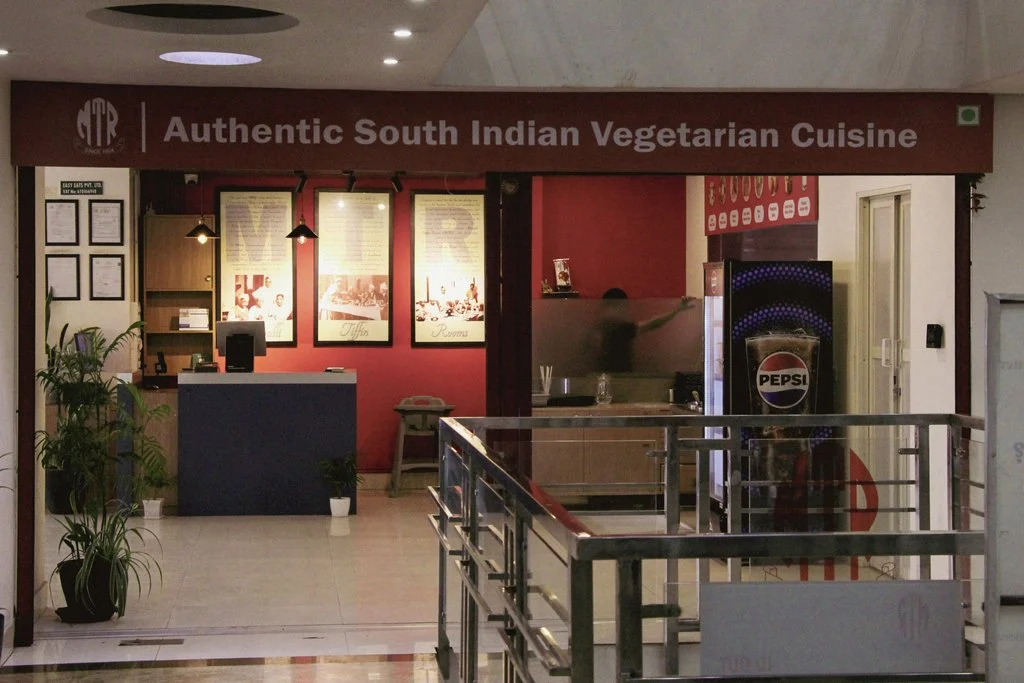
MTR stands for Mavalli Tiffin Rooms. Mavalli is the neighbourhood in Bengaluru where it all began, and “tiffin” refers to a light breakfast or afternoon meal rather than a substantial lunch or dinner. However, when you hear Dolly preparing the family’s tiffins in the morning, it is more of a general term for the lunch carried in the iconic stacked aluminium containers that are this subcontinent’s answer to Tupperware.
The story of MTR begins in 1920, when the four Maiya brothers left their small village for the big city of Bengaluru in search of better opportunities. They had already gained experience working in the kitchens of prominent households. The restaurant began as the Brahmin’s Coffee House and was renamed MTR in 1960. After a trip to Europe, one of the brothers raised the bar for Indian restaurants by introducing sterilised kitchens and an open-kitchen policy, so that customers could walk through and judge the cleanliness for themselves.
But there is even more: During “the Emergency”, when the government capped restaurant prices and told five of the city’s best-known restaurants to sell at the same low, fixed rates, some complied and some quietly cut quality. MTR did neither. It kept its standards where they were and hung a board outside the restaurant announcing its daily losses. That went on for 16 days, and on the 16th day MTR shut its doors. During the shutdown, the team invented packaged rava idli mixes, which launched a department store and a packaged-food empire. In 1994 the business split in two: the packaged foods (sold to Norway’s Orkla in 2007) and the restaurant chain, which the Maiya family still runs. Today MTR has branches across India and abroad, including right here in Kathmandu.
Quick context: The “Emergency” (1975-77) was a period when India’s prime minister Indira Gandhi suspended democratic freedoms, censored the press and jailed opponents. It’s remembered as one of the darkest chapters of Indian democracy.
But enough history. Let’s eat! Our top picks, which we HIGHLY recommend: the Rava Onion Masala Dosa, the Pudi Idli and a filter coffee. How to drink filter coffee: pour it from the cup into the bowl and sip it from the bowl. How to eat the dosa: With your hands of course! In most Indian food joints, you will find a sink to wash your hands before and after eating. If you want to know about vegan items, ask the staff. After all our visits, they are quite familiar with what vegan means.
A short temple stop
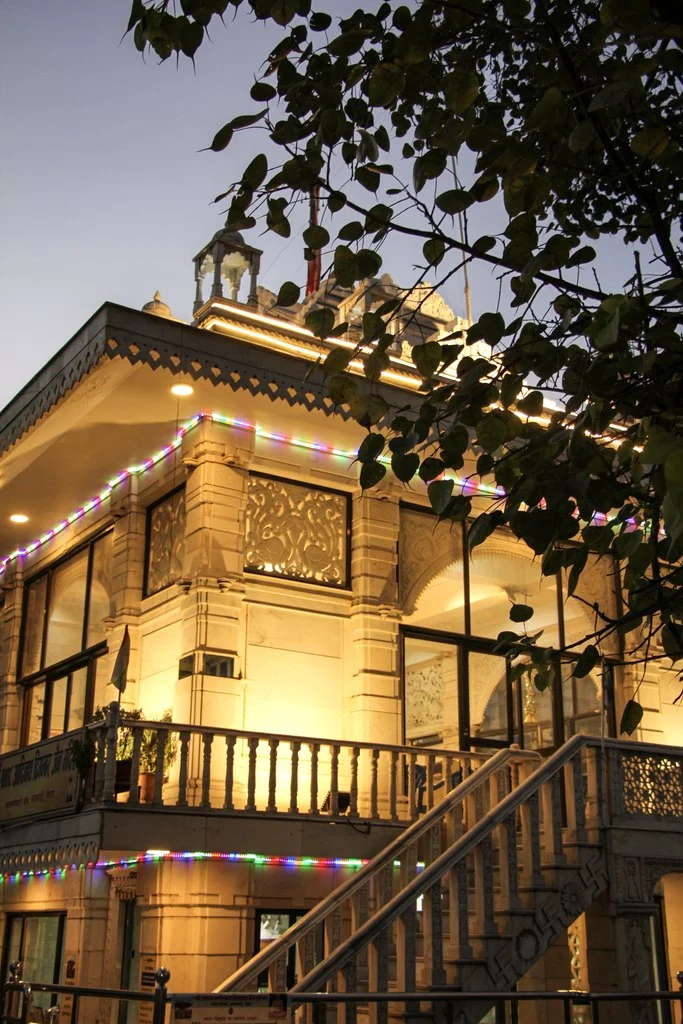
I’m sorry to make you walk after you’re (hopefully) stuffed and happy, but we’re heading for a classic post-meal digestive. Leave the building and walk down the street to the next big intersection. Stop and look back to the left: that’s the Bhagawan Adinath Jain Mandir, dedicated to Lord Adinath, the first Tirthankar of Jainism. According to Jain tradition, Lord Adinath lived in the distant cosmic past at the beginning of the current time cycle. Beyond being a spiritual pioneer who taught the path to liberation (moksha), he is traditionally celebrated as the founder of human civilization – credited with teaching humanity agriculture, cattle rearing, arts, writing, and organized social governance. Ask the guard if you are allowed to visit. You will have to take your shoes of if you enter the white temple building.
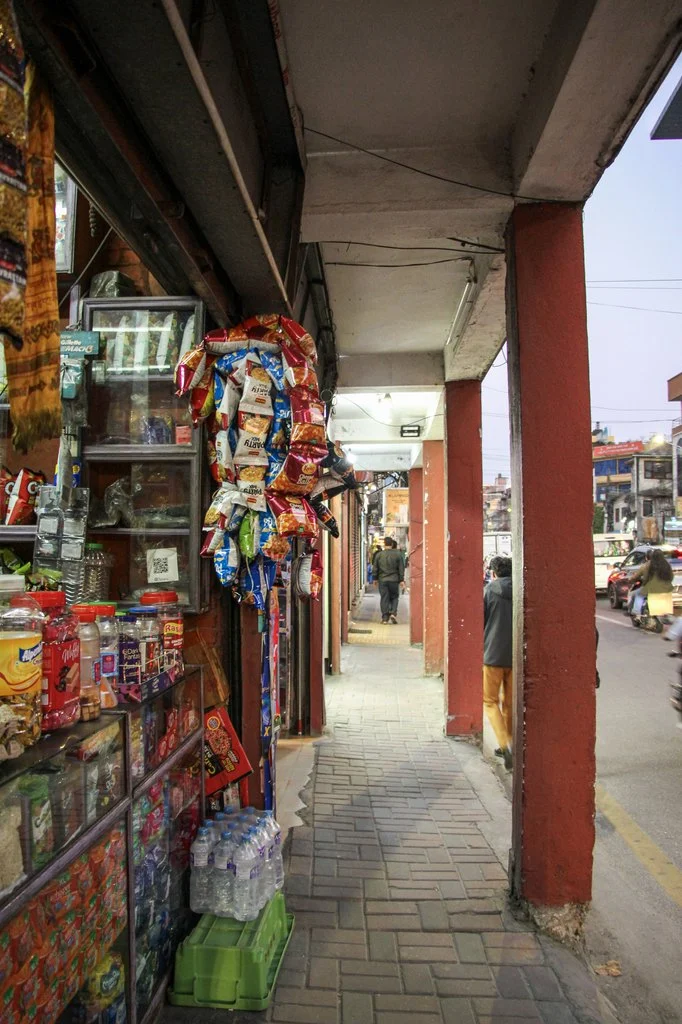
Time for a digestive
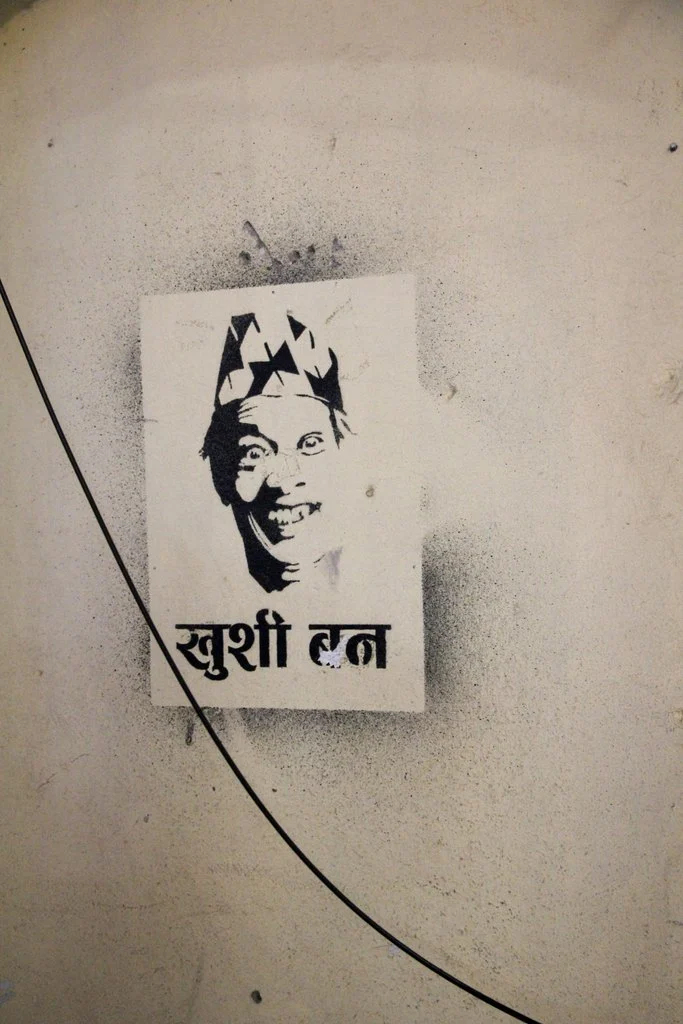
Exit the temple and look at its wall. This is one of Shashank’s favourite graffiti pieces in the city: Kushi ban, “be happy”. The man is wearing a topi, the traditional Nepali cap, usually made of colourful dhaka fabric and worn by men. Look across the street and you’ll spot him on the opposite wall too. You’ll find him all over the city, so keep an eye out on your next taxi ride.
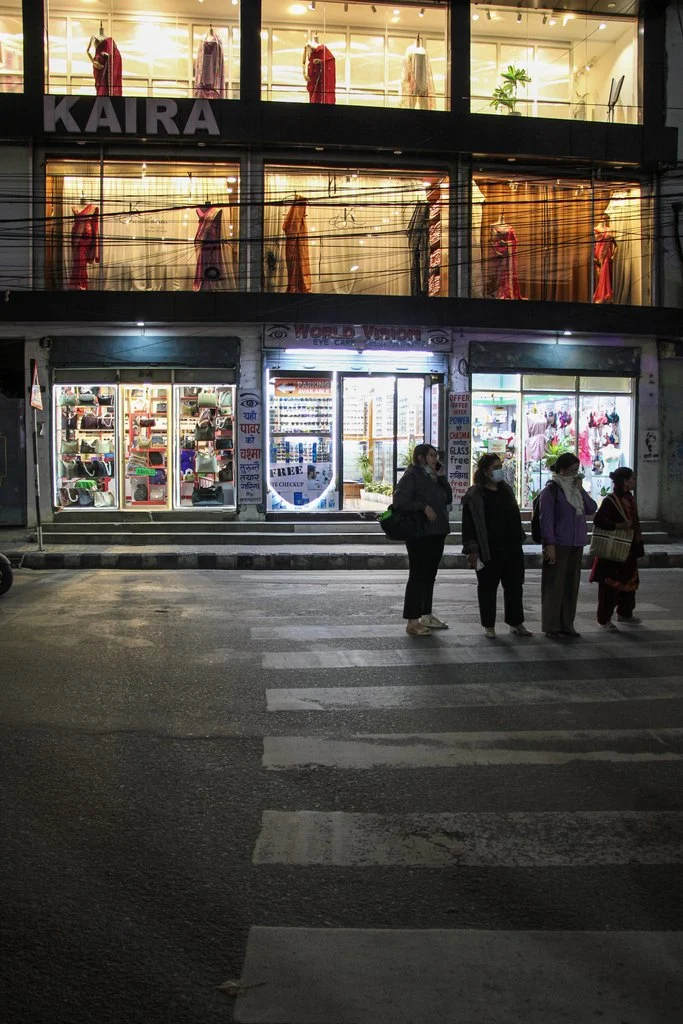
Cross at the crossing on the left and continue straight. A few shops down you’ll see TOP IN TOWN, our favourite paan stall.
Paan is a traditional treat of betel leaf wrapped around various fillings. It’s a mouth freshener and digestive aid, traditionally eaten in one bite. We usually order a meetha paan (sweet paan) without supari, a stimulant made from areca nut. Ask for a small one. Even then, I always need two bites. If you’re too full for even a single bite (admittedly a gigantic one), you can ask for your paan to be packed and take it with you. Paan stalls are at their most charming after dark, when the displays of ingredients light up in all colours.
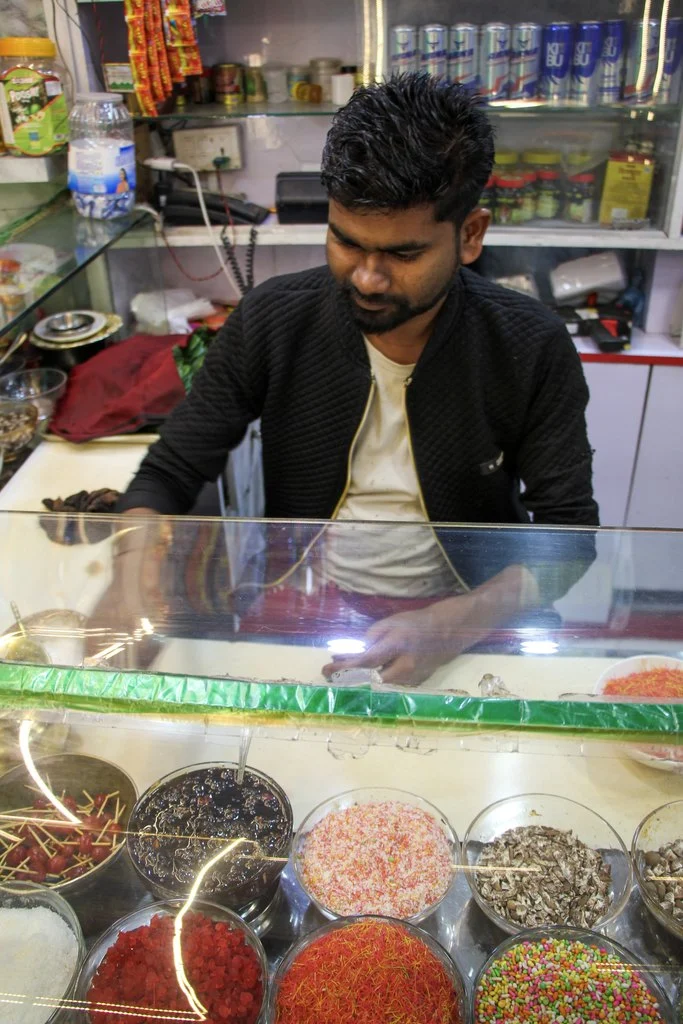
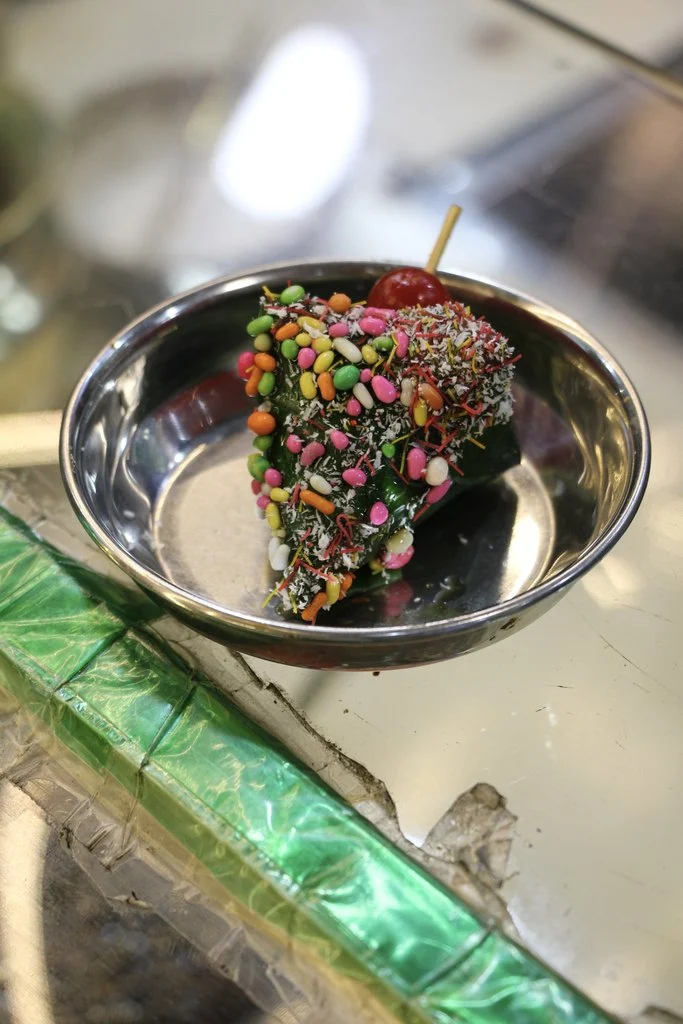
Right next door are a pharmacy and, across the road, a Big Mart, one of Nepal’s supermarket chains. Cross the road and walk back the way you came, this time on the opposite side.
City Centre Mall
Next stop: City Centre. You may have already spotted the mall while eating your dosa at MTR. Go in for a stroll. There are sports brands on the first floor, handy if you’re still hunting for trek gear, although they carry more general sportswear than serious trekking equipment. Head up to the third floor to take a commemorative photo of your walking tour in the photo booth. You get a printed copy for your fridge and a digital one for your socials. Check your teeth for stray betel leaf before you click!
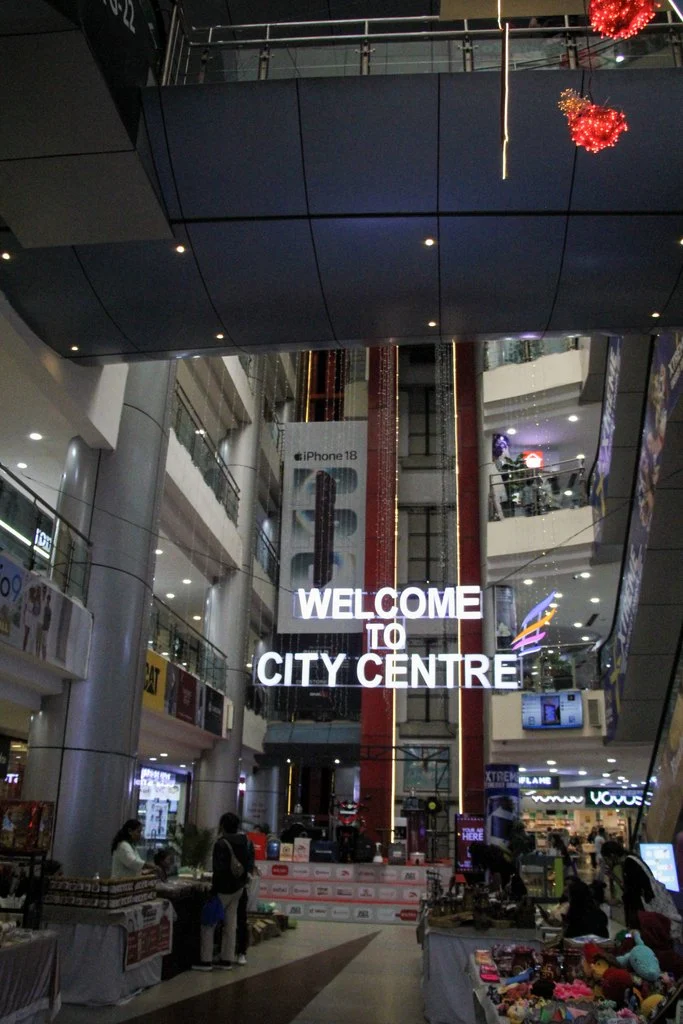
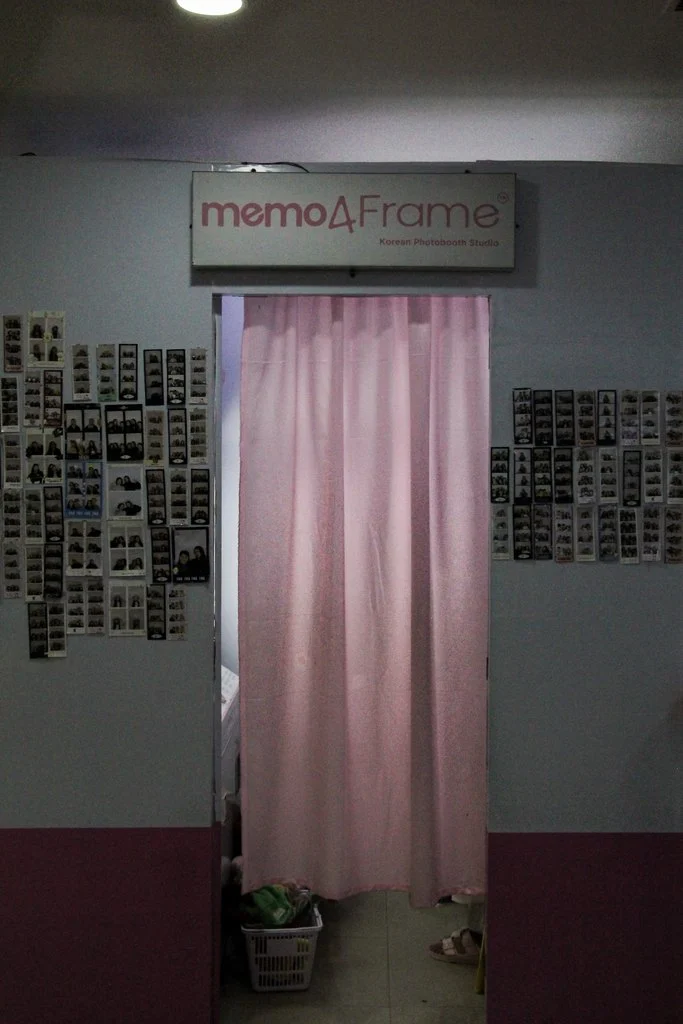
The tree in the road
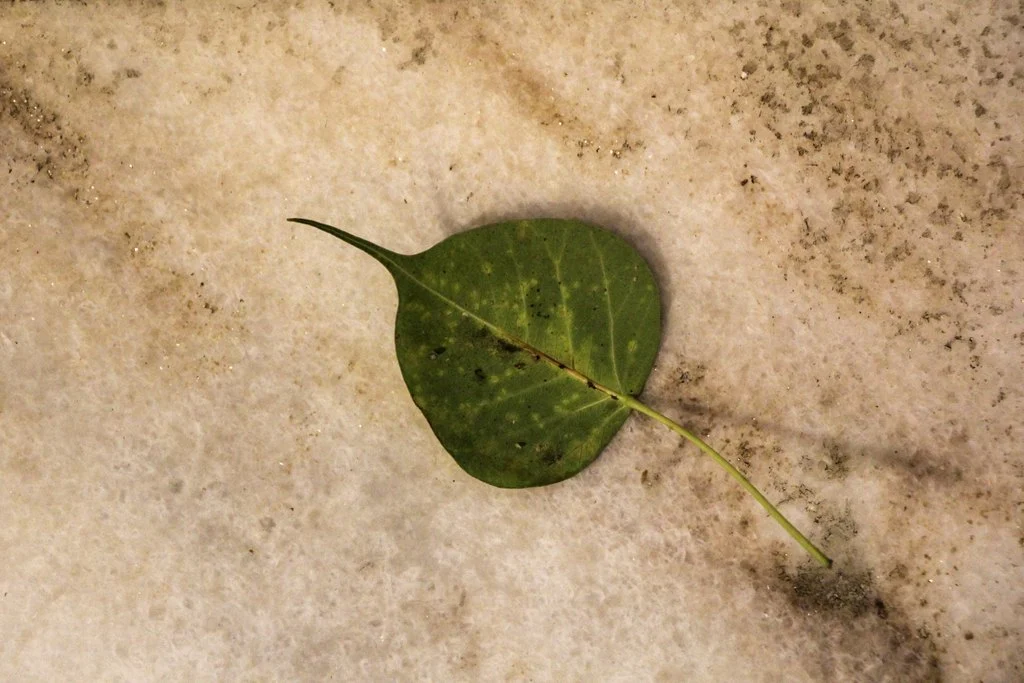
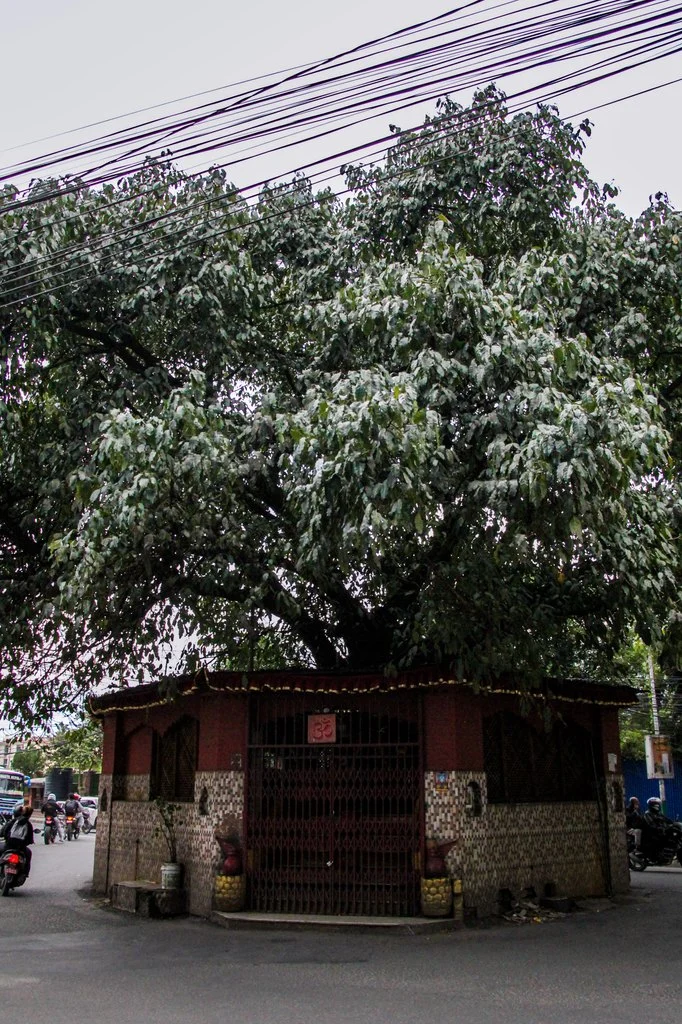
Leave the mall and keep walking down the street back towards Karwaan. The big tree in the middle of the road is the Kumari Sthan Mandir. Kumari refers to the goddess Kumari, associated with the living-goddess tradition, sthan means place or dwelling, and mandir means temple. The tree is a pipal, revered as the home of deities, spirits and cosmic energy. If it’s open, you can visit.
Finishing our Walking Tour in Kathmandu: Heading back to Karwaan Bed and Breakfast
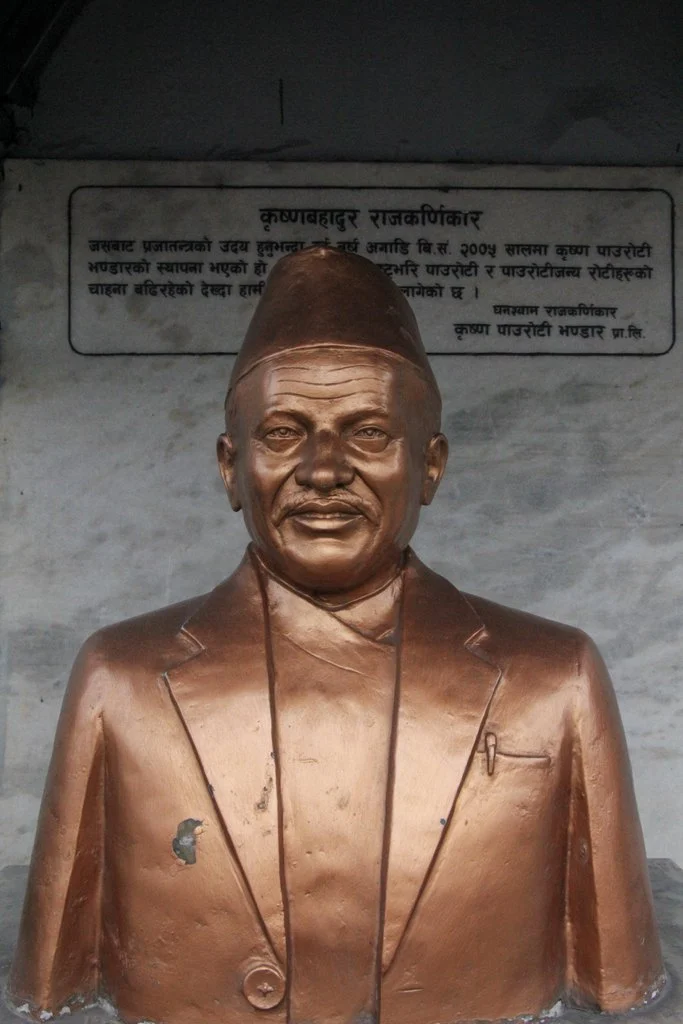
Continue towards Karwaan. Just before the crossing you’ll pass a golden statue of Krishna Bahadur Rajkarnikar. Remember him? From here, I’d suggest crossing to the right first, then crossing the four lanes at the crossing in front of the copyshop to get back to Karwaan.
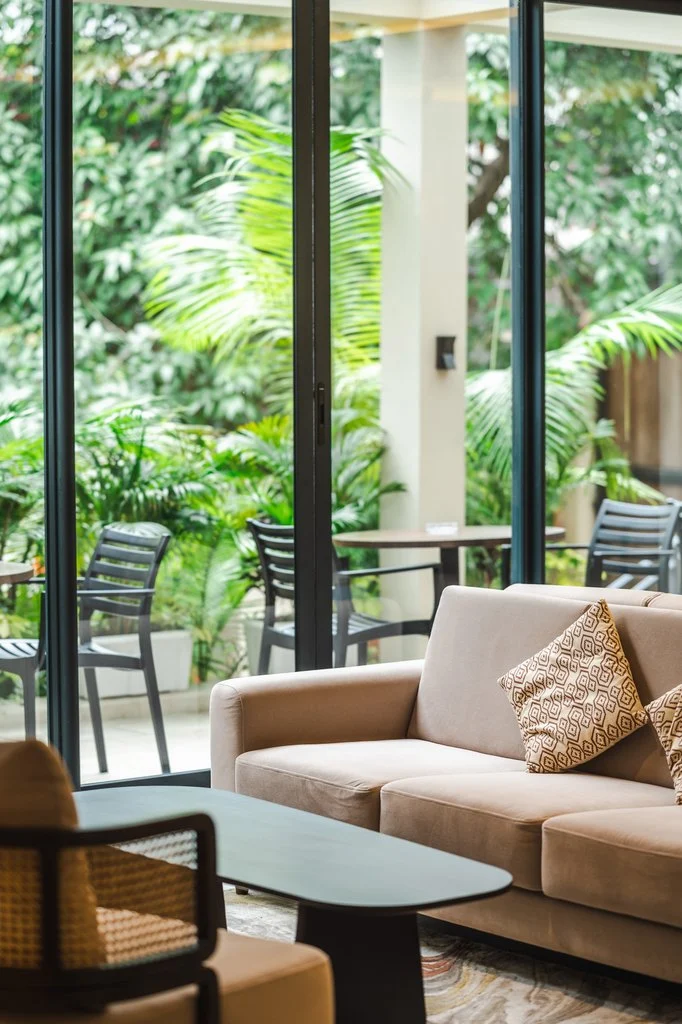
Welcome home.
If you did this walking tour, tag us on your social media at @_karwaan_. We’d love to see!
This Kathmandu walking tour is brought to you by Ena.
Sources:
The Kathmandu Post: Krishna Pauroti once meant white bread. Here’s the story behind this Kathmandu institution.
The Annapurna Express: Unraveling the history of samosas
Codé Nast Traveller: Timeless Tables: Why MTR in Bengaluru is the hippest 100-year-old in town