
Why We Built Karwaan to Be Eco-Friendly Bed and Breakfast
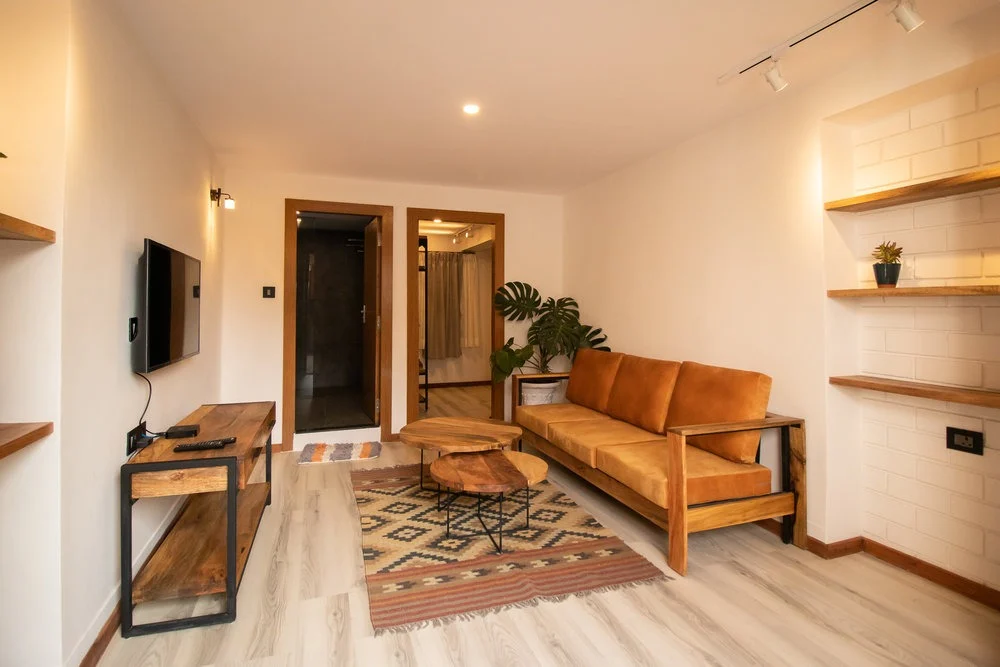
Table of Contents
Eco-friendly is one of those words that has been applied to so many things for so long that it has largely stopped meaning anything specific. Hotels put plants in the lobby and call it sustainable. Properties swap plastic straws for paper ones and announce an environmental commitment. The gesture and the substance are rarely the same thing.
When we were building Karwaan, we were not thinking about how to market an eco-friendly bed and breakfast positioning. We were thinking about how to build something we would be comfortable operating every day, for a long time, without waste we could not justify. The choices that came from that thinking are not dramatic. They are practical. And they show up in small, consistent ways across the guest experience rather than in a single headline feature.
Quick insights: Eco-Friendly Bed and Breakfast
- Karwaan is an eco-friendly bed and breakfast built around practical, everyday sustainability rather than marketing claims.
- Local craftsmanship matters, with custom mango wood furniture and copper details made by Nepali artisans.
- Single-use plastic is reduced through reusable glass water bottles and refillable drinking water.
- Energy and water are used responsibly without compromising guest comfort.
- Thoughtfully prepared breakfasts help minimize food waste while supporting a quality guest experience.
- Sustainability at Karwaan is about consistent choices, not certifications or symbolic gestures.
- Guests enjoy modern comfort while supporting a locally owned accommodation committed to responsible hospitality.
Building with Local Materials and Local Hands
When we renovated K1 and built K2, the materials and the people doing the work were local. The custom mango wood furniture throughout both buildings was made by Nepali craftsmen. The copper details were sourced and worked locally. The decision to build this way was partly aesthetic: we wanted something that felt rooted in its place rather than imported, and partly practical: local materials and local craft travel less distance, support the local economy, and produce results that mass-manufactured furniture cannot replicate.
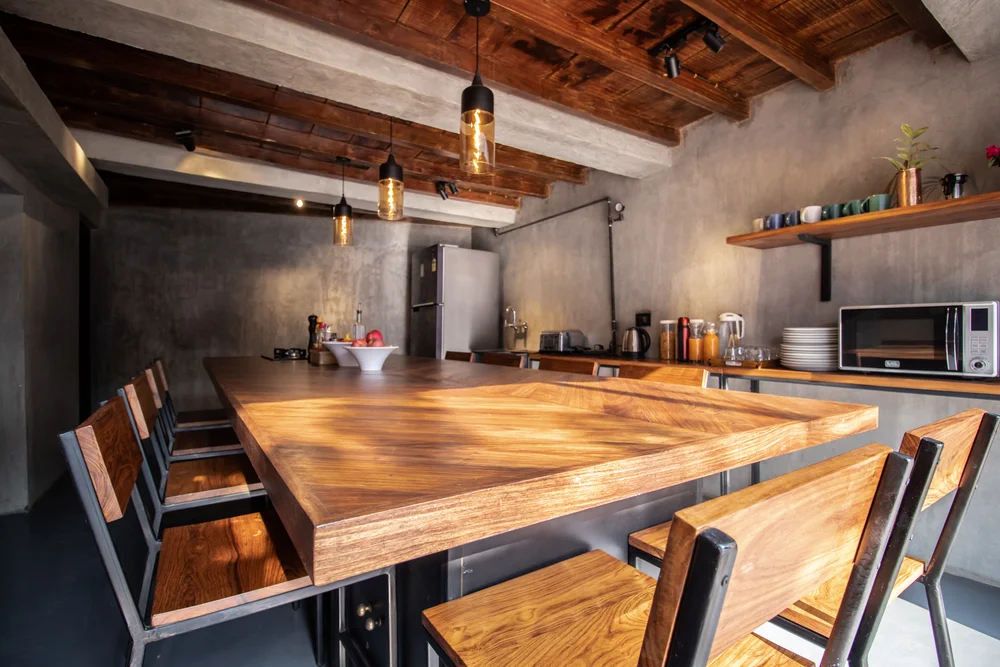
This is not a carbon calculation we ran on a spreadsheet. It is a consequence of building the way we believe things should be built. The furniture at Karwaan has a different relationship to the space than something ordered from a catalogue would, and the craftsmen who built it have a connection to the property that creates a different quality of care in the work.
What Eco-Friendly Means in a Kathmandu Context
Nepal faces specific environmental pressures that give the concept of eco-friendly a more concrete meaning than it carries in wealthier countries with robust waste management infrastructure. Plastic waste in particular is a visible and serious problem across Kathmandu. The Bagmati River, which runs through the city, carries the consequence of inadequate waste management in a way that is impossible to ignore if you spend time here.
A property that removes single-use plastic from its daily operations is making a choice that has a direct, local consequence rather than an abstract global one. Every guest who stays at Karwaan and does not generate a plastic bottle’s worth of waste is a small but real contribution to a specific local problem.
We do not present this as solving anything. It is one property that makes choices it can control. But it is also the only kind of change that actually accumulates into something, many small, consistent decisions rather than one large symbolic gesture.
Energy and Water Consciousness
Kathmandu’s electricity supply has improved significantly in recent years following the expansion of hydropower capacity, but responsible energy use remains relevant in a city where the grid has historically been unreliable and where energy costs are real.
The rooms at Karwaan are not over-engineered with systems that consume energy regardless of occupancy. Air conditioning is available in every room but is used when needed rather than running as a default. Lighting is practical and personal, bedside lights rather than ceiling systems that flood an entire room with more light than anyone needs at 11 pm.
Water use is approached in the same way. Hot showers are a genuine amenity at Karwaan, not a token gesture, but the property is not running water through unnecessary systems for the sake of a spa-like experience. The minimalist design philosophy extends to resource use in a way that reduces consumption without reducing comfort.
Breakfast Without Excess
The breakfast included in every room rate at Karwaan reflects the same approach as everything else: make something good, do not waste what you make. A family-run property preparing breakfast for guests each morning can calibrate what is prepared to what will actually be eaten in a way that a large hotel buffet structurally cannot.
Food waste in hospitality is one of the industry’s less discussed environmental problems. The abundance model, more than anyone will eat, presented as generosity, produces waste that a more considered approach avoids. At Karwaan, breakfast is a genuine meal prepared with care rather than a display of quantity.
The Honest Limits
Being an eco-friendly bed and breakfast in a city like Kathmandu has limits that honesty requires acknowledging. We cannot control the waste management infrastructure outside our property. We cannot source every ingredient locally or seasonally all of the time. The city that surrounds Karwaan has environmental challenges that no single property can resolve.
What we can do is make the choices within our control consistently. Local materials over imported. Calibrated use over excess. Small decisions made every day rather than a large commitment made once and forgotten.
That is what eco-friendly means at Karwaan in practice. Not a certification or a marketing position. Just a way of running the place that we are comfortable with.
What This Means for You as a Guest
Staying at Karwaan does not require any environmental sacrifice on your part. The rooms are comfortable. The water is clean. The breakfast is good. The air conditioning works. Nothing about the eco choices at Karwaan requires guests to trade comfort for conscience.
What it does mean is that your stay produces less plastic waste than a comparable hotel would generate, the furniture in your room was made by a local craftsman rather than manufactured overseas, and the water you drink comes from a glass bottle that will be washed and used again rather than thrown away.
If that matters to you, Karwaan was built with you in mind. If it does not particularly matter to you but you want a comfortable, well-designed, family-run place to stay in Kathmandu, the eco choices are just part of the background of a property that makes considered decisions about most things.
Either way, you are welcome. Reach out at karwaannepal.com or email the team directly to ask about availability.
Experience Sustainable Comfort at Karwaan
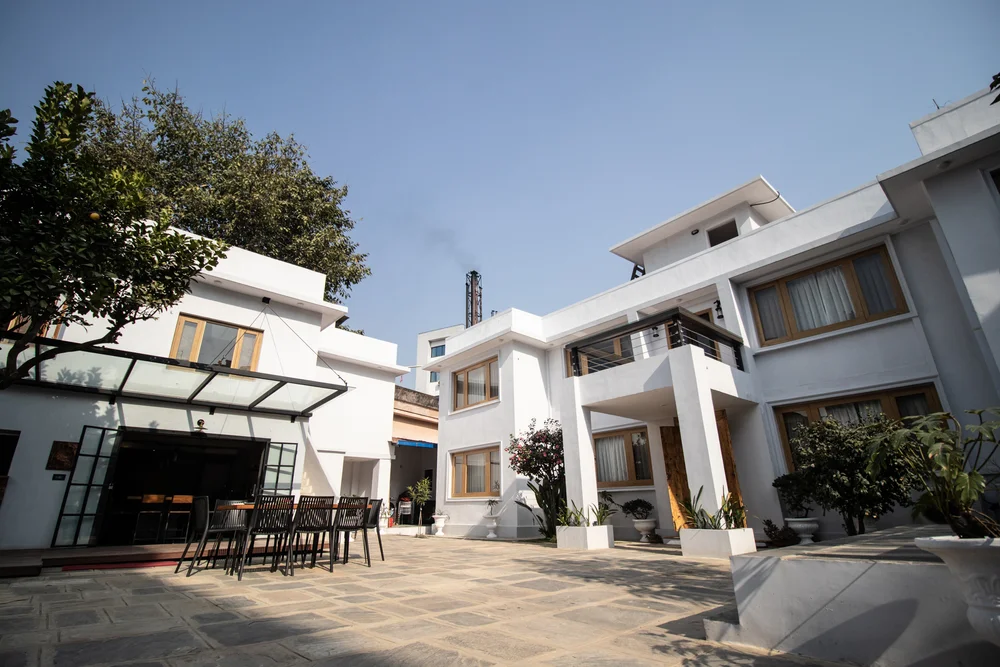
Looking for an eco-friendly bed and breakfast in Kathmandu that combines thoughtful design, local craftsmanship, and genuine hospitality? Karwaan offers a comfortable stay where every detail is designed with both guests and the environment in mind. Book your stay today and experience a more mindful way to explore Kathmandu.
FAQs
1. Why did Karwaan choose to build with an eco-friendly bed and breakfast approach?
It was less a deliberate positioning decision and more a consequence of how we think things should be built. Local materials, local craftsmen, no unnecessary excess. The eco outcomes came from making choices we were comfortable with rather than from designing toward a sustainability label.
2. Does the eco approach affect comfort in any way?
Not at all. Every room has air conditioning, hot showers, reliable Wi-Fi, and memory foam mattresses. The choices we make around energy and water use are calibrated rather than restrictive. Guests get everything they need for a comfortable stay.
3. Is all the furniture at Karwaan locally made?
Yes. The custom mango wood furniture and copper details throughout both K1 and K2 were made by Nepali craftsmen. We built this way because we wanted something that felt rooted in its place and because the quality of local craft is something manufactured furniture cannot replicate.
4. Does Karwaan have a formal eco certification?
No. Our approach is practical rather than certification-driven. We make consistent choices within what we can control, and we are honest about the limits of what a single property can achieve in a city with broader environmental challenges.
5. Why does eco-friendliness matter specifically in a Kathmandu context?
Kathmandu faces real and visible environmental pressures, particularly around waste and resource use. Choices made at the property level have a direct local consequence here rather than an abstract one. That makes it feel less like a positioning decision and more like a basic responsibility.